Review · PORTUGAL
Horta: University Startup Whale and Dolphin RIB Boat Trip
The best part of this Horta whale-watching trip is the university marine researcher on board. You are not just pointed toward a fin and sent home with a photograph. You get current information about behavior, identification, and the data being collected in the waters between Faial and Pico. I also like the land-based whale spotters, who help the boat search more intelligently, and the chance to see much more than whales, from dolphins and turtles to shearwaters and flying fish.
The trade-off is the sea itself. A 16-person RIB moves quickly and can bounce hard in rough water. You may get wet even in the supplied waterproof jacket and trousers, so this is not a good choice if you are pregnant, have serious back problems, recently had surgery, or simply dislike a brisk ride on open water.
Key details before you book
- A researcher joins the boat: Marine biologists from the University of Lisbon and the Azores explain the animals and collect information during the trip.
- Sperm whales are present year-round: Blue and fin whales are more associated with spring, while sei and Bryde’s whales can also appear in summer.
- The wildlife list is unusually broad: Dolphins, turtles, sharks, sunfish, squid, octopus, flying fish, and seabirds are all possible.
- The boat holds 16 people: Actual groups can be smaller. One outing had 11 tourists and two marine biologists.
- The trip lasts about three hours: Departures are scheduled for 9:00 in the morning and 2:00 in the afternoon.
- Rough seas are part of the bargain: The crew supplies waterproof clothing, but you should still wear shoes that can get wet or dry quickly.
Why the university connection matters on the water
Horta has a long connection with Atlantic whale watching, but this outing adds a useful scientific layer. A marine researcher from the University of Lisbon and the Azores stays on board, explaining what you are seeing while also helping collect data. That makes the experience feel more purposeful than a simple boat ride in search of a dramatic splash.
The briefing covers the marine life found around Faial and Pico, including the region’s more than 25 cetacean species. You learn what may be present before the boat leaves, and the crew gives updated information about which species have been reported before each departure. Sightings are never promised, but the information helps you understand the search.
I especially like this format if you want to tell a sperm whale from a sei whale, or understand why a group of dolphins is behaving in a certain way. On one outing, a marine biologist named Anna was praised for explaining the animals clearly. Another trip included Cristiana, who gave detailed information about the whales and dolphins being watched. These examples point to the main strength of the trip: the guide is there to interpret nature, not just operate a camera.
The research link also gives the outing a responsible purpose. One past participant appreciated that part of the money supports student research. That does not remove the need for careful wildlife rules, but it gives your ticket a useful connection to ongoing study in the Azores.
More Speedboat and RIB Dolphin Trips in Portugal
- Albufeira: Benagil Caves & Dolphin Watching Speed Boat Tour
★ 4.6 · 6,316 reviews - Funchal: Whale and Dolphin Watching Speed Boat Tour
★ 4.6 · 526 reviews - Pico Island: Azores Whale & Dolphin Watching on Zodiac Boat
★ 4.8 · 408 reviews
Leaving Horta in a 16-person RIB
Meet Naturalist Science and Tourism at the marina 15 minutes before departure. For the morning trip, arrive by 8:45. For the afternoon trip, arrive by 1:45. Hotel pickup is not included, so you need to make your own way to the marina.
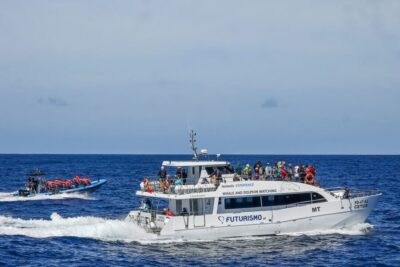
The first formal part of the outing is a safety briefing of about 10 minutes. You are then fitted with waterproof clothing and shown how the RIB works. The boat is a semi-rigid inflatable craft built for speed and close observation, with space for up to 16 people.
That speed is useful. Whales and dolphins cover ground quickly, and the captain may need to move between areas after waiting for a sighting. One particularly successful trip involved the captain shifting position twice to reach whales and place the boat well for observation. At the same time, speed means motion. The ride can feel like a theme-park attraction when the sea is lively, though there is no guarantee of calm water.
Choose your clothing with care. The operator supplies a waterproof jacket and trousers, but your shoes are your responsibility. Wear footwear that can cope with spray, and avoid bringing anything that cannot handle getting damp. A warm drink and lemon cookies were offered after one cold trip, but food and drinks are not part of the standard inclusion, so do not count on refreshments.
Searching from land, then searching from sea
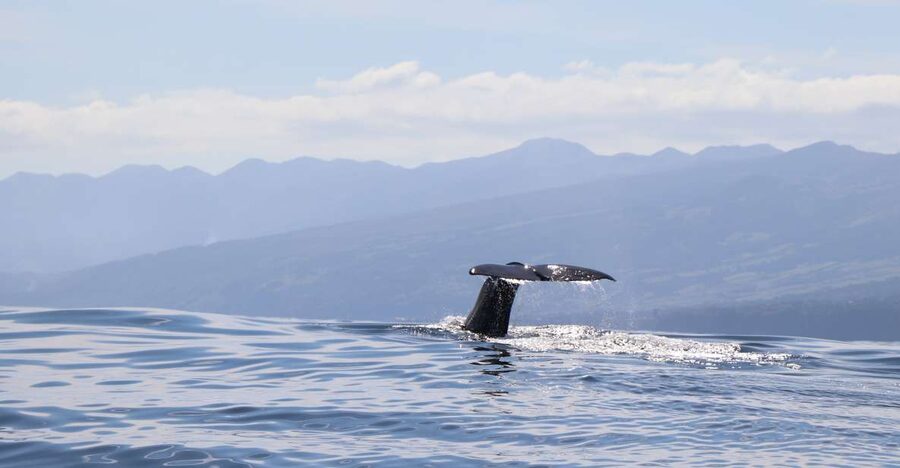
The company works with whale spotters on Faial and Pico. These observers scan the ocean from land and help direct the boat toward areas where whales or dolphins may be active. This is an important detail because it means the crew is not simply driving out and hoping for luck.
The boat still has to search once it reaches the right zone. Ocean wildlife is free to move, and a sighting can be brief. You may see a whale surface, breathe, and disappear before the boat reaches it. You may also spend time waiting, watching the horizon, or moving to another area. That uncertainty is part of any responsible wild-animal trip, not a fault in the schedule.
The listed wildlife-viewing and photo-stop portion lasts about 30 minutes, but the full expedition runs for roughly three hours. The rest of the time includes leaving the harbor, searching, moving between sightings, and returning. I would treat the three hours as an ocean outing rather than a fixed show with a set number of viewing minutes.
The crew’s careful boat handling matters. Reports from different outings describe the skipper keeping a respectful distance from whales and moving with care around animals. That can mean a less dramatic approach than racing right alongside a whale, but it is better for the animals and usually gives you a calmer, more natural view.
What you might see by season
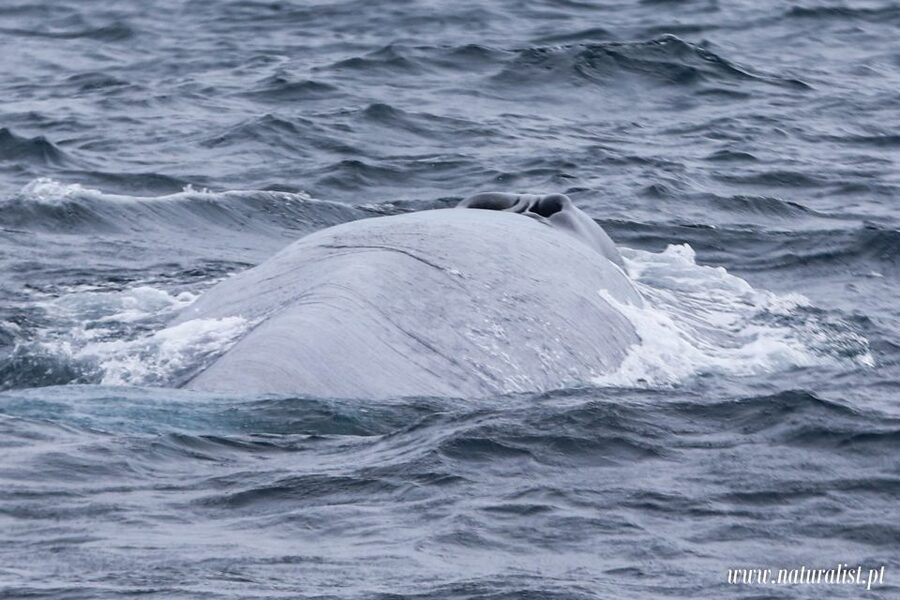
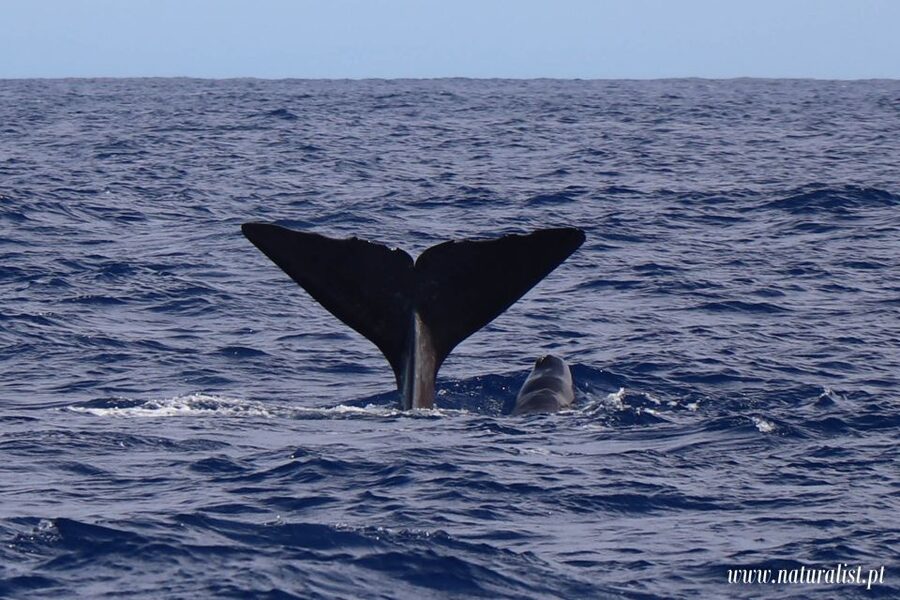
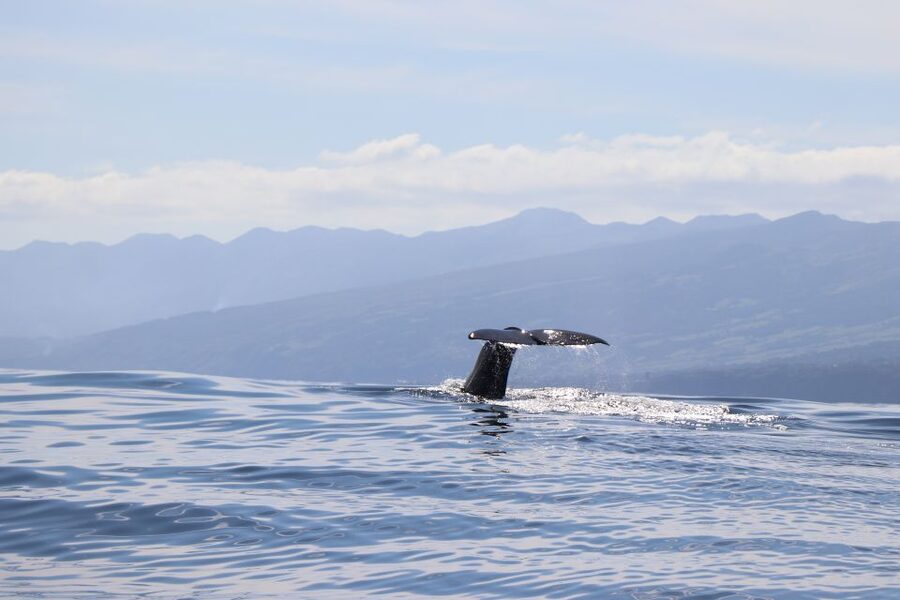
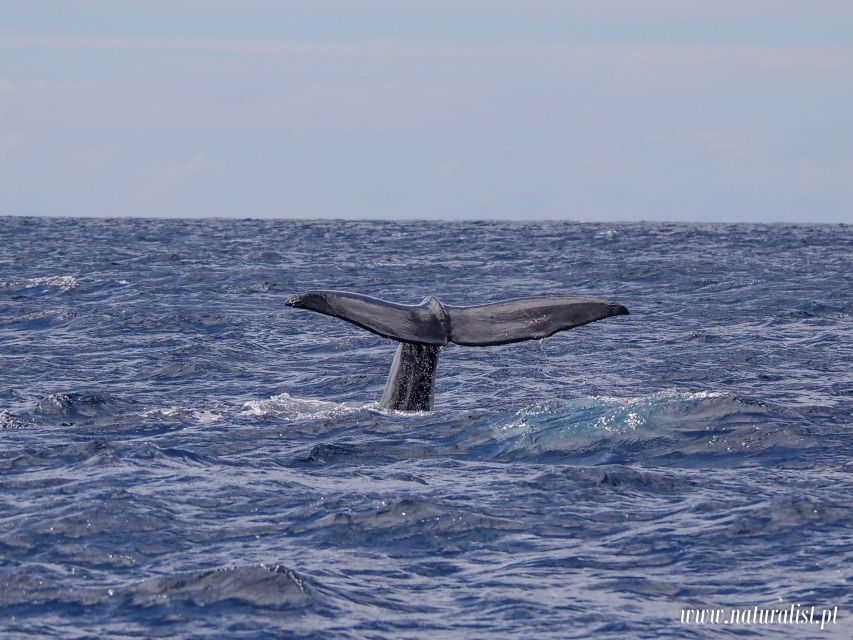
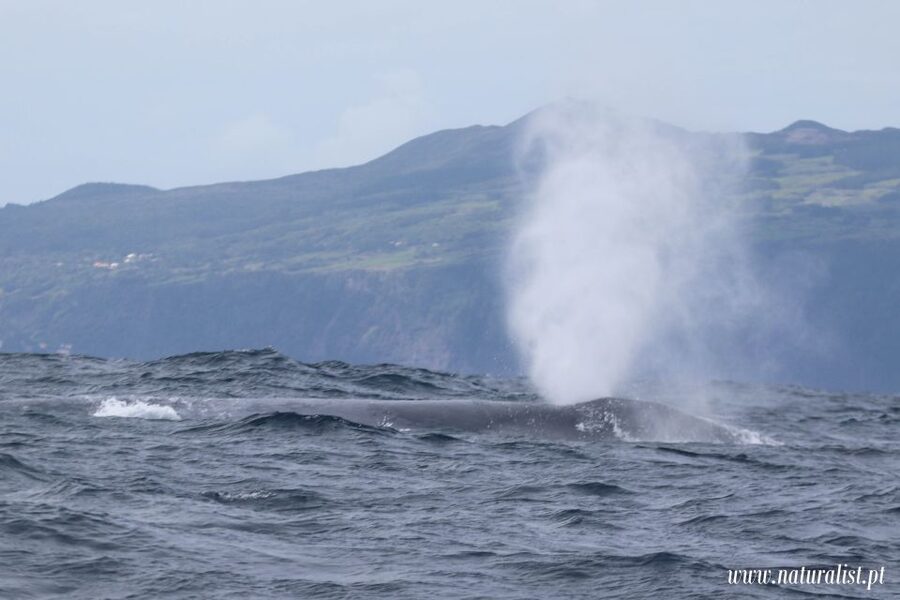
The Azores sit in a productive part of the Atlantic, and the species list changes with the season. Sperm whales are resident throughout the year, so they are the main large-whale possibility in any month. Their presence does not guarantee a sighting, but it gives the boat a strong year-round target.
Spring brings a better chance of blue and fin whales. Blue whales are the largest animals on Earth, while fin whales are also enormous and fast-moving. Sei whales may appear in summer, and Bryde’s whales have also been seen during warmer months. Humpback whales are migratory and can pass through as well.
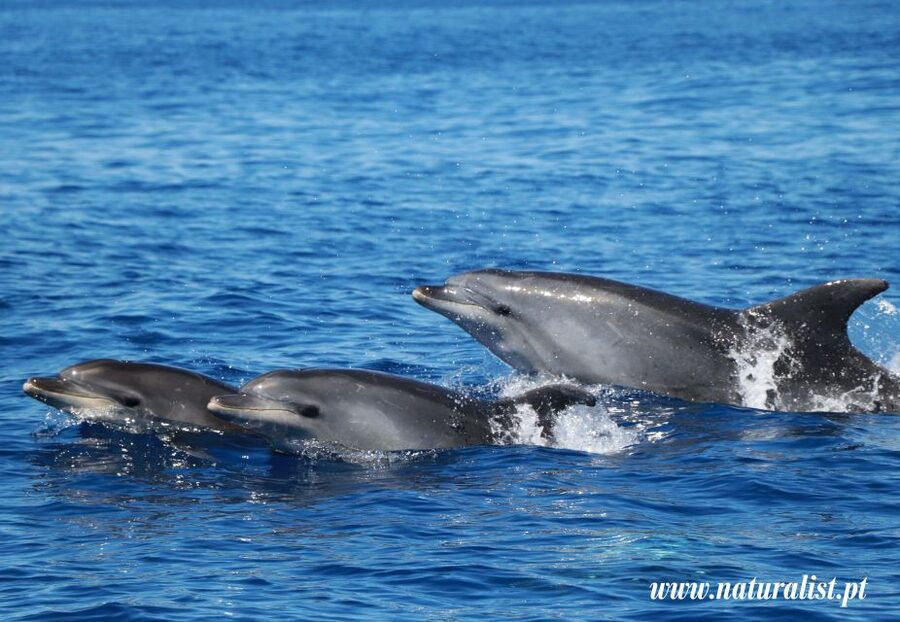
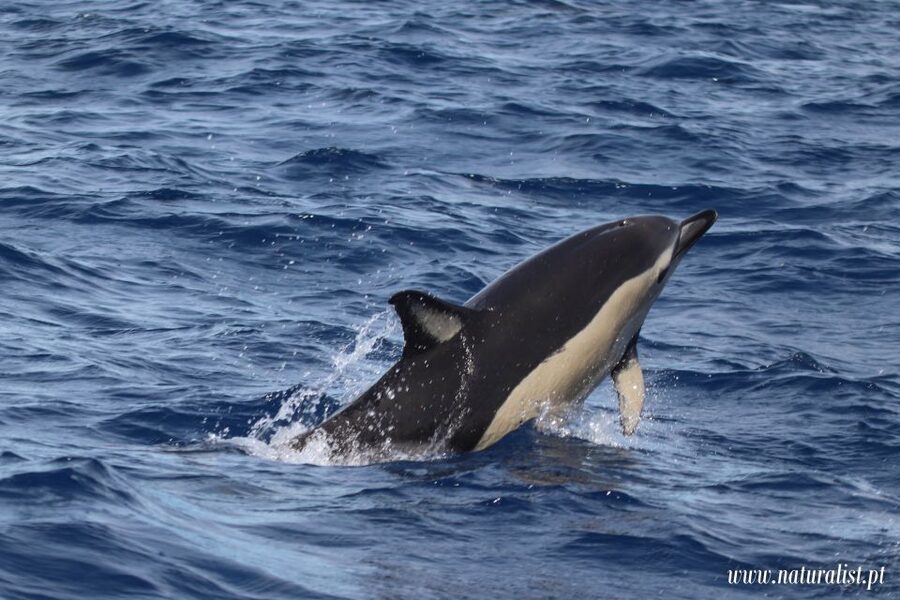
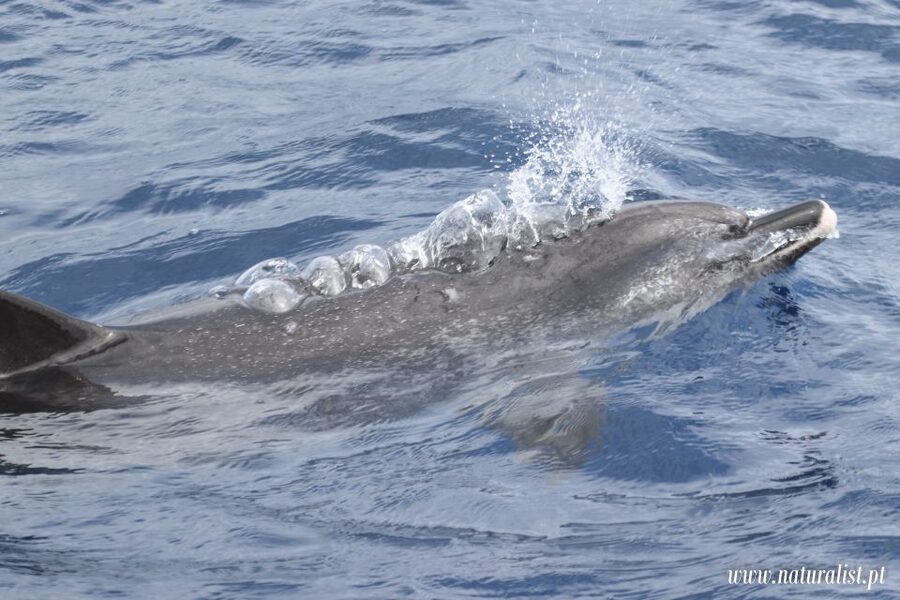
Dolphins add a more reliable source of action. Bottlenose, Risso’s, and common dolphins are resident in the area, with other migratory species also possible. A successful outing recorded dozens of dolphins, while another saw hundreds feeding alongside sperm, sei, and humpback whales. Those large groups can turn the ocean into a busy feeding scene, with birds and fish gathering around the same food.
The smaller animals are worth watching for too. Loggerhead and green turtles live in the Azores, while leatherback and Kemp’s ridley turtles may also occur. Flying fish, squid, octopus, hammerhead sharks, blue sharks, and ocean sunfish are all on the possible list. You will not see every species, but the broad range makes it worth keeping your eyes on the water between whale sightings.
Birdwatchers should bring the same patience they bring for whales. Cory’s, great, and Manx shearwaters may pass over the sea, along with common and roseate terns. Tuna have also appeared during trips. One outing included shearwaters and tuna, while another produced thousands of birds feeding around whales and dolphins.
More Whale and Dolphin Watching Tours in Portugal
- From Funchal: Ecological Catamaran Dolphin Whale Watching
★ 4.5 · 8,204 reviews - Funchal: Dolphin and Whale Watching Catamaran Cruise
★ 4.5 · 5,697 reviews - From Ponta Delgada: Whale and Dolphin Watching Trip
★ 4.7 · 4,109 reviews - Funchal Bay: Dolphin & Whale Watch Luxury Catamaran Cruise
★ 4.2 · 2,684 reviews
A closer look at the three-hour route
The route begins at Naturalist Science and Tourism in Horta’s marina. After the safety briefing, you head out by RIB with the guide, captain, and marine researcher. The first stretch gives you scenic views toward the open water, but the main purpose is to reach the feeding areas identified by the spotters.
Once wildlife is found, the researcher explains what you are seeing. This is where the trip earns much of its price. You are given context about species, behavior, and the wider marine ecosystem instead of receiving only a quick announcement that a whale is nearby.
The boat then pauses for photographs and observation. The captain’s job is to give you a useful angle without crowding the animals. Dolphins may approach the boat or travel beside it, while whales generally require more patience and distance. You might see several species on one trip, but the normal expectation is around two or three cetacean species.
After the main sighting, the crew may continue searching for other animals. A trip can produce whales and dolphins, or dolphins and seabirds, or a more modest sighting. One outing did not produce whales, which is a real possibility and should be part of your booking decision. The ocean is not a zoo, and a professional crew cannot force an appearance.
How the boat ride feels in real conditions
The RIB is a practical choice for wildlife watching because it is nimble and fast. It can cover more water than a slow boat and reposition when animals change direction. It also gives you an open-air view, without large windows or a high enclosed deck blocking the water.
The downside is comfort. The sea can become turbulent, particularly during the faster sections. One April outing was described as bumpy, though the whale sightings made the ride worthwhile. People seated toward the front are more likely to feel spray and movement, and the bow can be a wet place when conditions turn rough.
I would not book this casually if you have a serious back condition, are pregnant, have had recent surgery, or are bringing a child under five. These restrictions are listed for good reason. Even with protective clothing, the boat cannot make a rough Atlantic swell feel gentle.
Children aged five and older are not specifically excluded by the supplied conditions, but every adult should consider the child’s tolerance for noise, spray, waiting, and sudden movement. The trip is best for people who want an active wildlife outing, not a quiet cruise.
Is $101 a fair price?
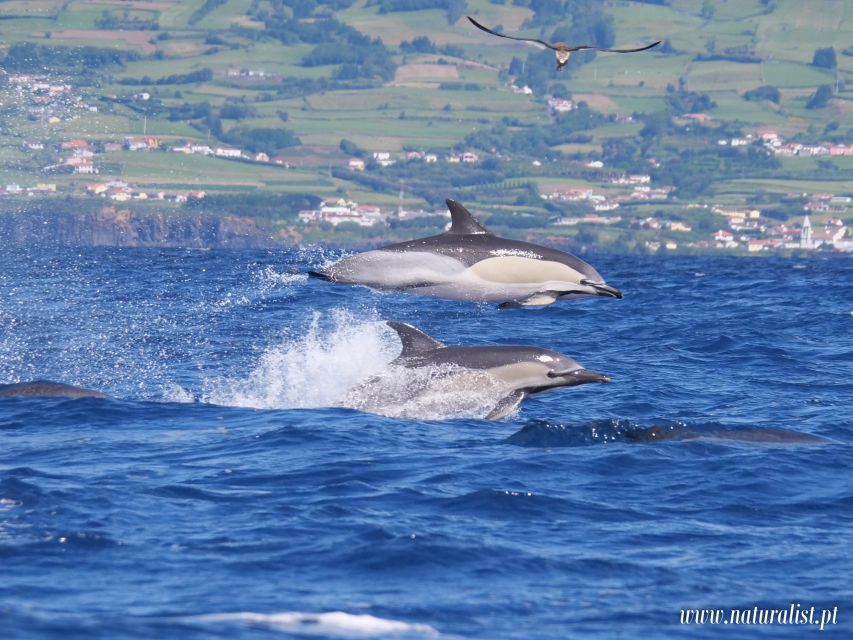
At $101 per person, this is not the cheapest way to spend a morning in Horta. The price makes more sense when you add up what is included: a three-hour expedition, a marine researcher on board, a wildlife briefing, safety insurance, and waterproof clothing. The research connection and land-based spotting system also add value, especially if you care about how the search is conducted.
Photography can add to the value. On some outings, the guide took photographs and provided the best images afterward at no extra charge. This is not listed as a guaranteed inclusion, so I would treat it as a welcome possibility rather than a promise.
The value depends partly on your priorities. If you only want a guaranteed whale sighting, no operator can deliver that at any price. If you want a guided look at Azorean marine life and are willing to accept nature’s uncertainty, the price is reasonable for a small, research-linked trip.
The group size can help. The RIB carries up to 16 people, but one October group had 11 tourists and two marine biologists. A smaller group gives you more room to hear the explanations and watch the water without feeling packed in.
Weather, changes, and flexible planning
Trips depend on weather conditions. If the sea is unsafe, the outing can be rescheduled, and a full refund is available if the trip is canceled. One storm forced a change of date, but the operator communicated early and even arranged a departure from Pico instead. That kind of flexibility matters in the Azores, where weather can change travel plans quickly.
You can cancel up to 24 hours before departure for a full refund. A reserve-now, pay-later option is also available, which helps if you are arranging several island activities at once.
I would avoid placing this trip on the day you fly home or catch a tight ferry. A weather change could move the outing, and you want enough time to accept a new departure rather than lose the experience. The morning and afternoon choices make it easier to fit around your plans, but check availability for the date you want.
Tours are conducted in English or Portuguese. Spanish is mentioned for the expedition program, while the booking details specifically list English and Portuguese. French may be possible if requested ahead of time, depending on availability. If language is important to you, confirm it before paying.
Who will enjoy this outing most?
I would choose this tour if you want:
- A short but active wildlife trip from Horta
- Explanations from a marine researcher rather than a general boat commentary
- A chance to see sperm whales in any season
- Seasonal possibilities such as blue, fin, sei, Bryde’s, and humpback whales
- Dolphins, turtles, seabirds, and smaller marine life as part of the search
- A fast RIB ride and open-air views
- An experience connected to university research
I would choose something else if you need a smooth, quiet boat, guaranteed whale sightings, hotel pickup, or a fully enclosed cabin. This is a nature expedition, so patience and flexible expectations matter.
Should you book the Horta whale-watching trip?
Yes, if you can handle an active ride and accept that wild animals set the timetable. The strongest reasons to book are the marine researcher, the land-based whale spotters, the broad species list, and the crew’s reported care around the animals. The trip can produce an extraordinary mix of sperm whales, dolphins, seabirds, turtles, and seasonal whales, but it can also produce a quieter day.
Book it for the quality of the search, not for a guaranteed photograph. Arrive early, wear quick-drying shoes, keep your schedule flexible, and choose a season that matches the species you hope to see. For a visitor who wants science, open water, and a genuine chance at Azorean wildlife, $101 is a sensible use of three hours.
FAQ
Where does the whale-watching trip leave from?
The tour leaves from the Horta marina. Look for Naturalist Science and Tourism Whale Watching and arrive 15 minutes before departure.
How long does the trip last?
The full expedition takes about three hours. Morning departures are scheduled for 9:00 and afternoon departures for 2:00, subject to availability.
What animals can I see?
Possible sightings include sperm, blue, fin, humpback, sei, and Bryde’s whales; bottlenose, Risso’s, common, and other dolphins; loggerhead, green, leatherback, and Kemp’s ridley turtles; sharks, sunfish, flying fish, squid, octopus, tuna, and seabirds.
Are whales present all year?
Sperm whales are resident in the region year-round. Blue and fin whales are associated with spring, while sei and Bryde’s whales can also appear in summer. Humpback whales are migratory.
Is a marine biologist included?
Yes. A marine researcher from the University of Lisbon and the Azores is on board to explain the marine life and collect data.
What languages are available?
The tour is offered in English and Portuguese. French may be requested in advance, depending on availability. Spanish is also mentioned for the expedition program.
Is waterproof clothing provided?
Yes. Waterproof clothing is included. You should still bring shoes that can get wet or dry quickly.
Is the trip suitable for everyone?
The activity is not suitable for children under five, pregnant women, people with back problems, or people who have had recent surgery. The RIB can be turbulent in rough conditions.
What happens if the weather is bad?
Trips depend on weather conditions and may be rescheduled. If the operator cancels the trip, a full refund is available. You can also cancel up to 24 hours in advance for a full refund.
Just added on the water around Portugal
- X Plorer – Caves (Benagil) & Dolphins Cruise★ 4.5 · 116 reviews
- Madeira : Whales and Dolphins wooden boat excursion★ 4.1 · 247 reviews
- Madeira: Whale and Dolphin Watching Tour★ 4.6 · 174 reviews
- From Machico: Madeira Whale and Dolphin Watching Boat Tour★ 4.8 · 225 reviews
- Vilamoura: Boat Tour Dolphin Quest & Marine Life Search★ 4.9 · 71 reviews
- Azores: Swim with Dolphins Atlantic Experience★ 4.4 · 29 reviews
- Vilamoura Tour to Benagil and the Dolphins★ 4.0 · 14 reviews
- Dolphin Watching and Cave Tour from Vilamoura★ 4.0 · 63 reviews
Portugal Dolphin Watching Tours, compared.
2.5-Hour Benagil Caves & Dolphin Watching
Our review of this trip →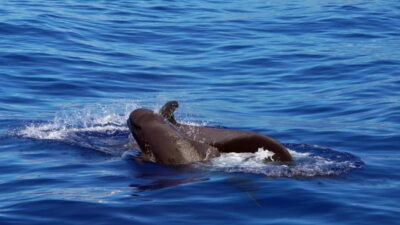
Ecological Catamaran Dolphin Whale Watching
Our review of this trip →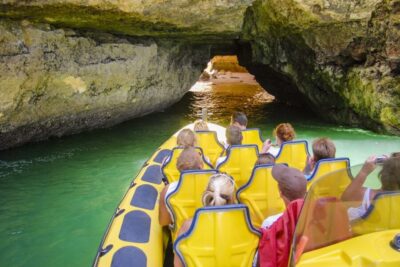
Benagil Caves & Dolphin Watching Speed Boat Tour
Our review of this trip →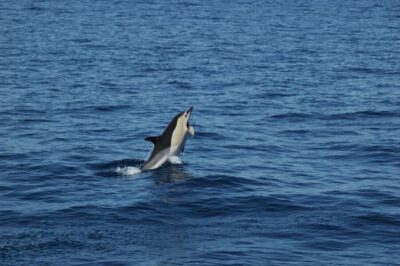
Dolphin and Whale Watching Catamaran Cruise
Our review of this trip →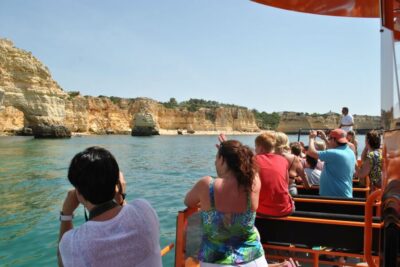
Dolphins Search and Benagil Caves from Albufeira
Our review of this trip →
Dolphin Watching and Benagil Cave Boat Cruise
Our review of this trip →