
Review · PORTUGAL
Lisbon: Dolphin Watching with Marine Biologist – Small Group
The main draw is simple: you leave Lisbon’s waterfront and look for wild dolphins in open water, not animals in a show. The three-hour trip combines a fast boat ride, marine-life spotting, and wide views of the city from the Tagus and Atlantic coast.
I like the live guidance from a marine biologist, and I like that the crew collects information for Oceanário de Lisboa and ICNF. The $61 price also covers the boat, safety gear, crew, insurance, and access to the Oceanic Lounge. The catch is that dolphins are free animals. The company reports sightings on 97% to 98% of trips, but there is no promise for your particular departure.
Key points at a glance
- Wild dolphins, not a staged encounter: You watch free-ranging animals and follow strict rules about not feeding or touching marine life.
- Marine science on board: A biologist explains dolphin behavior and helps collect useful data for ocean research.
- A lively three-hour route: You travel from Doca de Santo Amaro along the Tagus and out toward Cascais before returning to Lisbon.
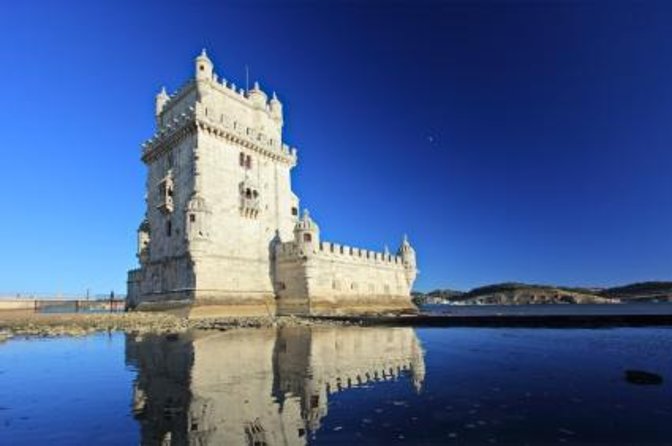
- Excellent city views: The return route can include the 25 de Abril Bridge, Belém Tower, Fort of São Lourenço do Bugio, and other monuments.
- Expect wind and motion: Even on a hot day, the open sea can feel cold, and the speedboat may be rough for anyone prone to motion sickness.
- A strong record, but no guarantee: The stated 97% to 98% sighting rate is encouraging, yet nature makes the outcome uncertain.
Why this is more than a quick dolphin cruise
Many Lisbon boat trips focus on monuments. This one uses the city as a starting point for a marine outing. You begin below the 25 de Abril Bridge, follow the Tagus toward the Atlantic, and spend much of the trip looking for signs of life in the water.
That change of setting matters. Lisbon can feel crowded and built-up from street level. From the boat, you see the river mouth, open water, coastal shore, and city landmarks in one outing. The monuments become part of a wider view rather than the whole point of the trip.
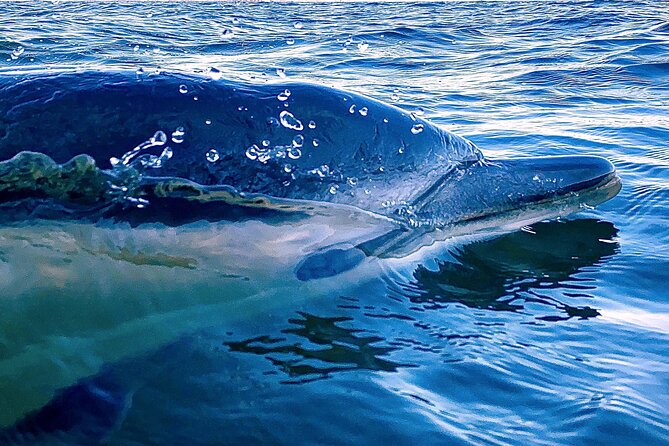
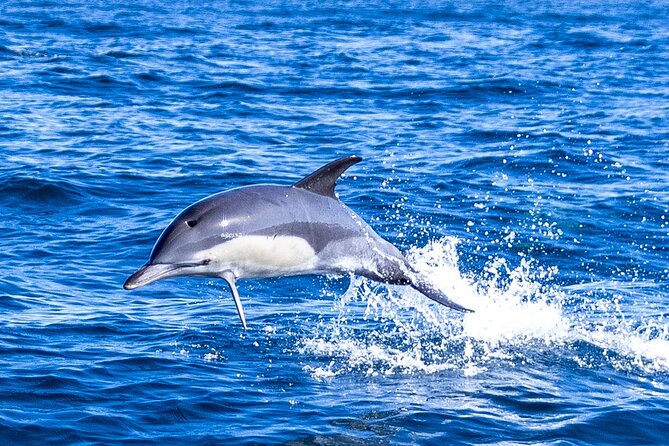
The strongest part is the natural setting. Dolphins may swim beside the boat, cross its wake, or disappear for long stretches before surfacing again. One outing recorded a pod of around 30 dolphins that stayed near the boat for about 20 minutes. Other departures have produced several pods, babies with adults, bottlenose dolphins, common dolphins, sunfish, seabirds, and even occasional whale sightings.
You should keep your expectations realistic. A high sighting rate is encouraging, but it does not turn a wild-animal trip into a guaranteed show. The staff may spend most of the time searching, checking the water, and communicating with other boats before finding anything.
More Dolphin Watching with a Marine Biologist in Portugal:
- Portimão: Benagil Caves & Dolphins Watching with Biologist
★ 4.8 · 3,795 reviews - Lagos: Combo Dolphin and Benagil Tour with Marine Biologist
★ 4.7 · 2,352 reviews - Lisbon: Dolphin Watching with Marine Biologist
★ 4.9 · 1,853 reviews
Starting below the 25 de Abril Bridge
The meeting point is the Mercedes-Benz Oceanic Lounge at Doca de Santo Amaro, Armazém 17, below the 25 de Abril Bridge. The experience begins at Terra Incógnita, where you can wait indoors, use the restrooms, and have coffee before departure.
This lounge is a useful part of the outing, especially if you arrive early. You receive a safety briefing before boarding, and the relaxed start gives you time to ask questions. Some departures also include hot drinks and pastel de nata after the trip, although food and drinks are not listed as standard inclusions, so you should not book this expecting a full meal.
The staff provides life jackets, and the boat is operated by a dedicated crew and skipper. Guides have included marine biologists such as Mariana, Vanessa, Maria, and Raquel, with skippers including Sebastião, Alexandre, Francisco, and Antonio on different departures. The exact team can change, but the format remains the same: one person handles the boat while a marine specialist explains the animals and the marine setting.
Following the Tagus toward the open sea
The boat first travels along the Tagus River. This part gives you a gentle introduction to the route, with Lisbon landmarks close by and the river traffic providing a sense of the city’s working waterfront.
The guide may explain the marine life you could see and point out changing conditions on the water. The Tagus is not simply a passage to the ocean. It is a place to watch for seabirds and marine animals while also taking in the city from a low, open-water viewpoint.
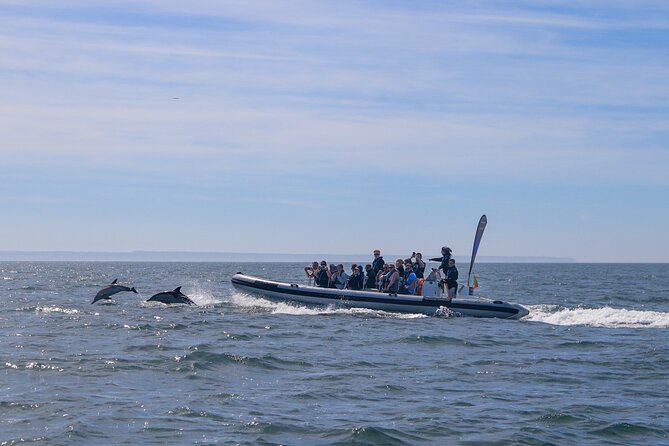
As the boat moves toward the river mouth, the ride becomes more exposed. The speedboat is part of the fun, but it also creates the main physical challenge. You can expect wind, spray, and movement, particularly as the boat reaches open water. The crew controls the pace and may slow down near dolphins so the animals are not disturbed.
Searching for dolphins off Lisbon
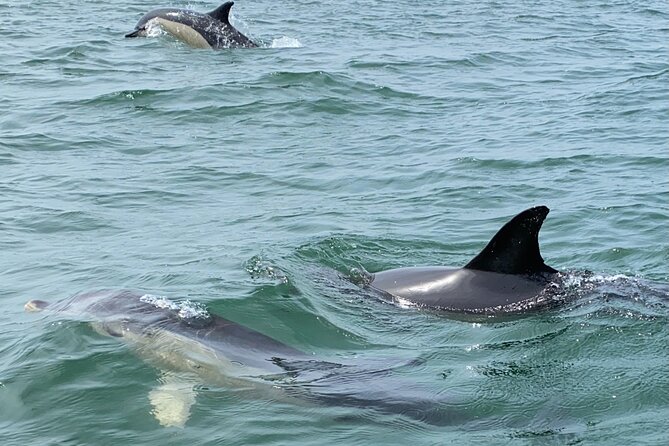
The open-sea portion is the heart of the outing. The crew searches for dolphins and other cetaceans, watching the water and using information from nearby boats when available. One group had reached roughly three quarters of its route without a sighting, then found a pod on the way back. That is a good reminder that the search can change quickly.
When dolphins are located, the boat does not treat them like a target for a high-speed chase. The crew aims to approach carefully and remain at a slow pace. You may see dolphins riding the waves near the bow, surfacing beside the boat, or moving in a larger group farther away.
Several kinds of dolphins have been seen on different outings. Common dolphins and bottlenose dolphins are among the possibilities, while some sightings have included very young animals. A pod of 60 to 70 bottlenose dolphins has been recorded, along with smaller nursery groups. These details make the marine biologist’s role especially useful, since the guide can help you understand what you are seeing rather than leaving you with a few quick fins and splashes.
Other wildlife is possible but not promised. Whales, sunfish, seabirds, and other coastal animals have appeared on different trips. Orca sightings have also been reported, though you should treat unusual animals as a lucky extra rather than an expected part of the tour.
More Small-Group Dolphin Trips in Portugal:
- Small Group Dolphin and Wildlife Watching Tour in Faro
★ 5.0 · 578 reviews - Small Group 2 Hour Dolphin Cruise with Snorkeling to Shell Key
★ 5.0 · 1,523 reviews - Small Group Dolphin Kayak Eco-Tour
★ 5.0 · 351 reviews - Eco-Raft Tour: Maui-Lanai Snorkel / Dolphin Watch (Semi-Private)
★ 5.0 · 259 reviews
What the marine biologist adds
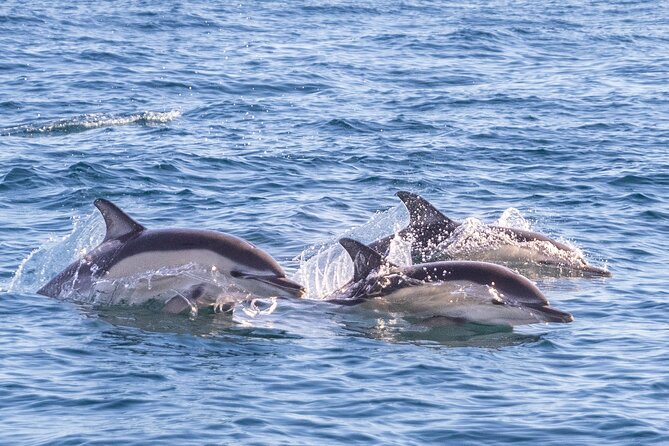
The guide is not just there to announce a sighting. Before and during the trip, the marine biologist can discuss dolphin species, behavior, habitat, and the need to keep a respectful distance.
That gives the tour more substance than a standard boat ride. You learn why dolphins may approach a wake, why a group can vanish beneath the surface, and why the crew avoids feeding or touching animals. The experience becomes a lesson in watching wildlife without turning it into a performance.
The staff also supports cetacean monitoring in partnership with Oceanário de Lisboa and ICNF. Data collection during the outing contributes to marine research and helps track what is happening in Portuguese waters. For me, that is one of the best reasons to choose this trip over a basic sightseeing cruise. Your ticket supports an outing designed around both enjoyment and observation.
The conservation message is practical rather than decorative. Guests are not allowed to feed animals, touch marine life, smoke, litter, or bring alcohol and drugs. These rules protect the animals and help keep the experience focused on responsible wildlife watching.
Returning past Fort Bugio and Lisbon landmarks
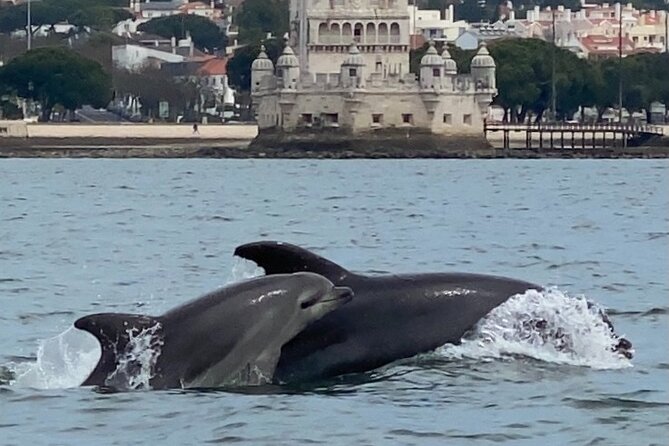
The route includes the Fort of São Lourenço do Bugio, the circular fort positioned near the mouth of the Tagus. You pass by this historic sea defense and may stop for photographs, depending on the route and conditions.
The fort marks the point where the river meets the Atlantic, so it also helps you understand the geography of the outing. Behind you is Lisbon’s riverfront. Ahead is open sea. The boat’s position gives you a view that is hard to get from the city streets.
The return toward Doca de Santo Amaro brings the best monument views. From the water, the 25 de Abril Bridge, Belém area, and other Lisbon sights appear in one broad sweep. The itinerary also includes the Cascais area, identified near JJC6+RP Cascais, where you may have another photo stop and a chance to view the coast from offshore.
The sightseeing portion does not replace a dedicated city tour. Commentary and exact stops can vary with weather, animal locations, and timing. Still, it is a smart use of the return journey. Even if the dolphin search is slow, you are not simply riding back to the dock with nothing to see.
The boat ride: exciting, but not gentle
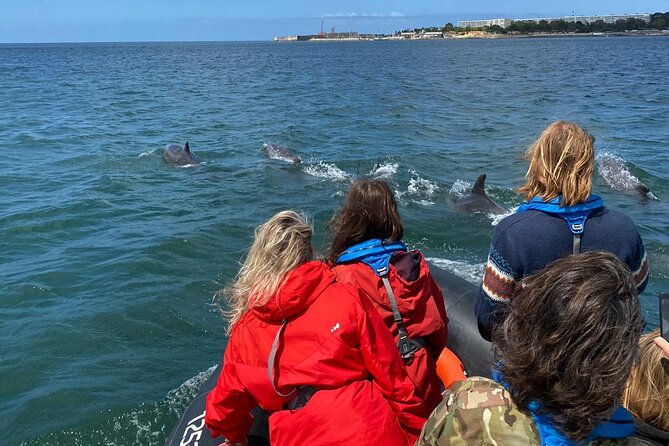
You should book this as a speedboat outing, not a calm river cruise. Several departures included lively turns and wave riding, and many people enjoyed the ride almost as much as the wildlife. The skipper’s handling is important, and the crew’s care has been a frequent strength of the experience.
The same features can bother some passengers. You sit in a moving boat for three hours, with exposure to wind and changing water conditions. Anyone with back problems, a recent surgery, or a strong tendency toward motion sickness should think carefully before booking. The activity is not suitable for children under five, pregnant women, wheelchair users, or people with the listed medical concerns.
If you do get seasick, have a proper breakfast beforehand and avoid milk and yogurt, as the operator advises. Wear comfortable clothes and shoes, and bring a windbreaker. Even during a hot Lisbon summer, the open water can feel surprisingly cold. Some departures have provided jackets, but you should still dress for wind rather than relying on a warm forecast in town.
The operator monitors weather, wind, gusts, cloud cover, swell, wave height, and currents. If conditions are unsafe, the company says it will contact you at least 48 hours before departure and offer another date or a full refund. That policy is reassuring because a smooth, safe outing matters more than forcing a trip into poor conditions.
Is $61 a fair price?
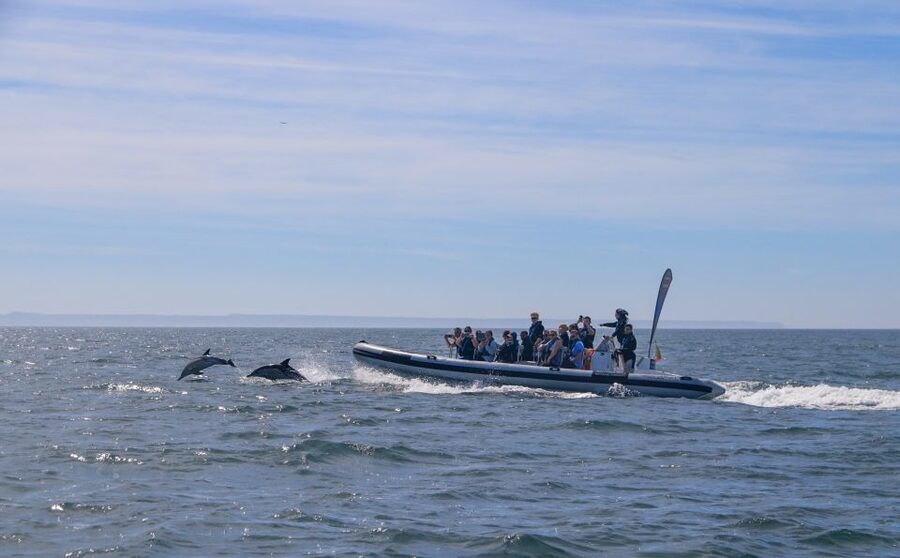
At $61 per person, the tour costs more than a simple harbor cruise but includes much more than a short look at Lisbon from the water. The price covers three hours, the boat, fuel, crew, marine biologist, insurance, life jacket, and Oceanic Lounge access.
I see the value in the combination. You get a wildlife search, a marine lesson, a fast coastal ride, and a different view of Lisbon’s major sights. The research connection also gives the fee a purpose beyond entertainment.
The value depends on how you judge uncertainty. You are paying for the search and the expertise, not only for a guaranteed dolphin encounter. If you need a certain result, a museum or monument tour offers more control. If you accept that wildlife watching includes waiting and chance, the price is reasonable, especially when the boat ride and city views are part of the day.
Free cancellation up to 24 hours before departure and reserve-now, pay-later booking make it easier to fit the outing into a changing Lisbon schedule. Starting times vary, so check availability for your dates.
Who will enjoy this trip most?

I would choose this tour for anyone who wants nature, science, and a bit of speed in one Lisbon activity. It works particularly well for couples, small groups, older children who can handle a boat, and visitors who have already seen the central monuments and want a fresh view of the city.
Families should consider the boat motion and the minimum age. Some children have loved seeing dolphins near the boat, but young passengers can become seasick. Adults with mobility issues should ask detailed questions before booking, even though crew members have helped passengers feel comfortable on past trips.
This is also a good choice for people who care about animal welfare. The rules are clear, the animals remain wild, and the trip supports monitoring work. You will not be promised a petting session or a staged encounter.
Should you book the Lisbon dolphin tour?
I would book it if you can accept uncertainty and want more than a standard sightseeing cruise. The best reasons are the marine biologist, the research link with Oceanário de Lisboa and ICNF, the high reported sighting rate, and the return past Lisbon’s riverfront landmarks.
I would skip it if you dislike fast boats, struggle with motion sickness, or need an accessible activity. I would also avoid booking it as your only chance to see dolphins if a missed sighting would ruin your day.
For everyone else, this is a strong three-hour use of your time in Lisbon. You may see one pod, several groups, a whale, or nothing at all. Either way, you get the Tagus, the Atlantic, a capable crew, and a closer look at how responsible wildlife watching should work.
FAQ
Where does the dolphin tour meet?
You meet at the Mercedes-Benz Oceanic Lounge, Doca de Santo Amaro, Armazém 17, below the 25 de Abril Bridge.
How long does the experience last?
The boat tour lasts three hours.
How much does the tour cost?
The listed price is $61 per person.
Are dolphin sightings guaranteed?
No. Dolphins are wild animals and may not appear. The operator reports a 97% to 98% sighting success rate based on its own logs.
What other animals might I see?
You might see whales, seabirds, sunfish, and other coastal wildlife. Orcas have also been reported, but they are not guaranteed.
Is a marine biologist included?
Yes. A marine biologist joins the boat tour and explains dolphins, marine life, and the research work connected with the experience.
Which languages are available?
Guiding is available in English, Portuguese, and Spanish.
What should I wear and bring?
Bring comfortable shoes, comfortable clothes, and a windbreaker. The boat can feel cold and windy even on a warm day.
Can children join the tour?
Children under five cannot join. Older children may participate, but the operator warns that the boat ride may cause seasickness.
Who should not book this activity?
The tour is not suitable for pregnant women, wheelchair users, people with back problems, people with recent surgeries, or children under five.
Can I cancel the booking?
You can cancel up to 24 hours in advance for a full refund. You can also reserve now and pay later.
Just added on the water around Portugal
- Arrábida Natural Park/Sesimbra: Dolphin Watching★ 5.0 · 2 reviews
- Algarve Dolphin Watching & Marine Life Eco Tour★ 4.6 · 47 reviews
- Albufeira: Dolphins & Benagil Caves RIB Tour★ 4.6 · 241 reviews
- Albufeira: Benagil Cave and Dolphin Sightseeing Boat Cruise★ 4.8 · 334 reviews
- Watching whales and dolphins on Terceira Island★ 5.0 · 150 reviews
- Whale and Dolphin Watching Tour at Terceira Island★ 5.0 · 39 reviews
- Terceira: Swimming with Wild Dolphins | Natural Habitat★ 4.8 · 51 reviews
- Sesimbra: Arrábida Dolphin and Whale Watching tour with biologist★ 5.0 · 248 reviews
Portugal Dolphin Watching Tours, compared.
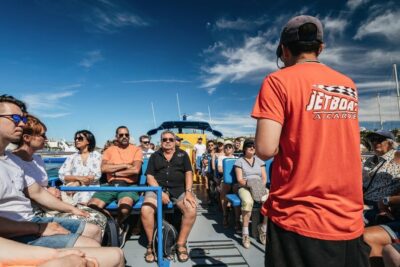
2.5-Hour Benagil Caves & Dolphin Watching
Our review of this trip →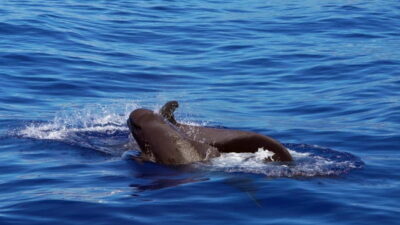
Ecological Catamaran Dolphin Whale Watching
Our review of this trip →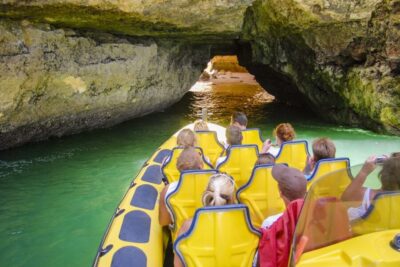
Benagil Caves & Dolphin Watching Speed Boat Tour
Our review of this trip →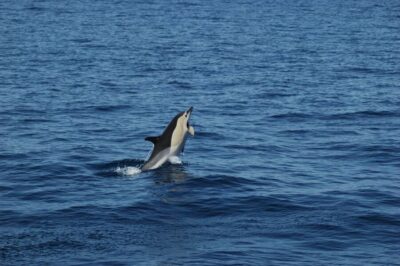
Dolphin and Whale Watching Catamaran Cruise
Our review of this trip →
Dolphins Search and Benagil Caves from Albufeira
Our review of this trip →
Dolphin Watching and Benagil Cave Boat Cruise
Our review of this trip →
From Ponta Delgada: Whale and Dolphin Watching Trip
Our review of this trip →Browse the lists this tour appears in