
Review · USA
Maui Eco-Raft Tour: Eye-Level Whale or Dolphin Watching – Lahaina
The best part of this Maui outing is the eye-level view. You sit close to the water in a small zodiac raft, so a whale’s back, tail, or spout feels far more immediate than it does from a tall sightseeing boat. I like the intimate group size and the marine naturalist narration, especially when the hydrophone lets you hear whale songs beneath the raft.
I also like that the trip changes with the season: humpback watching runs from December through April, while summer departures focus on dolphins and coastal scenery. The tradeoff is simple: this is an open, low boat, so you may get wet, and wildlife sightings are never fully predictable.
Key points to know before booking
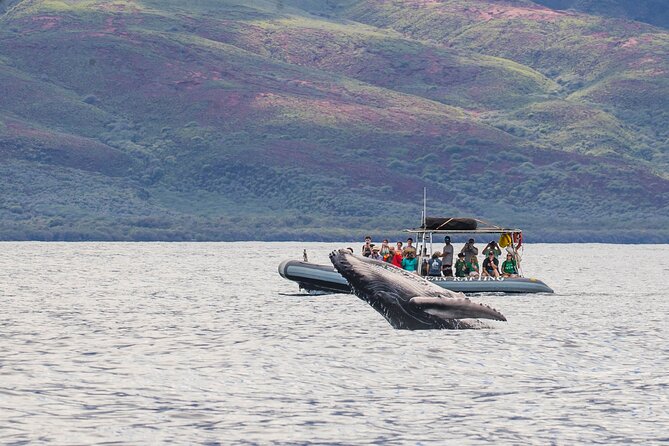
- Eye-level whale watching: The raft rides low to the sea, giving you a clear view of spouts, tails, breaches, and fins.
- Seasonal wildlife: Look for humpback whales from December through April, or choose a summer dolphin and coastal sightseeing trip.
- Hydrophone onboard: In whale season, you can listen to real whale songs as part of the naturalist commentary.
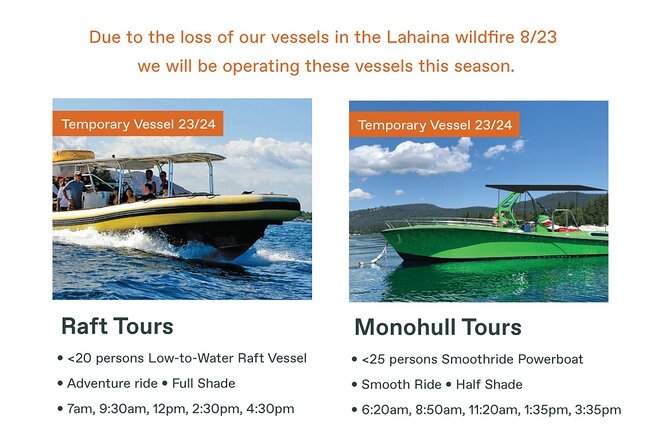
- Small-group feel: The boat holds no more than 25 people, with many departures carrying fewer.
- Plan to get wet: Ocean spray and light rain are possible, and shade varies by boat.
- Important limits: Children must be at least 3 years old, pregnant people cannot participate, and boarding requires physical mobility.
Why the low raft changes whale watching
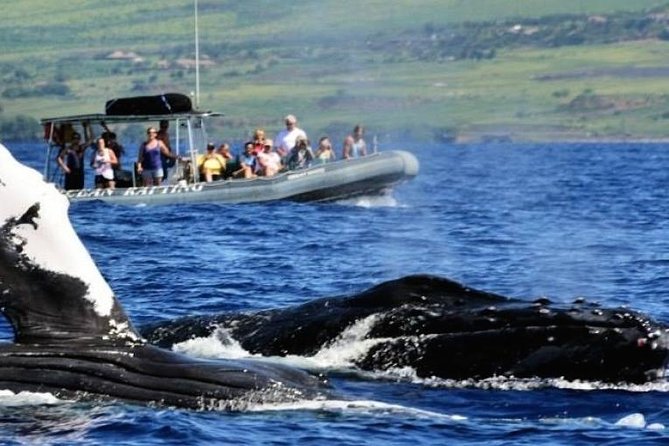
From Lahaina, this tour gets you onto the water for roughly two and a half hours. The main appeal is not speed or onboard entertainment. It is the position of the boat.
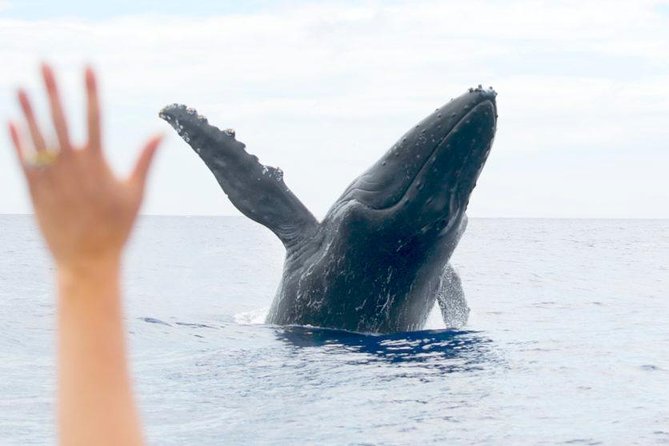
A zodiac raft sits low, close to the water. When a humpback surfaces nearby, you are looking across the sea rather than down from a high upper deck. That makes smaller details easier to notice, such as a pectoral fin lifting out of the water, a calf surfacing beside its mother, or a tail fluke slipping below the surface.
The boat stops when whales are spotted, giving you time to watch and take photos. Captains have been praised for moving between areas with whale activity and for positioning the raft without trying to interfere with the animals. Still, the crew cannot control where a wild whale surfaces. You might see repeated breaches, or you might spend part of the trip watching spouts and backs at a greater distance.
That uncertainty is part of the deal. This is not a staged animal encounter. The promise is a search on open water, guided by a crew that knows what to look for.
More Whale and Dolphin Watching Tours in the USA:
- Luxury Snorkel Cruise, Local Buffet with Whale & Dolphin Watch
★ 4.5 · 1,334 reviews - Dana Point Dolphin and Whale Watching with Underwater Viewing
★ 5.0 · 788 reviews - Whale and Dolphin Watching Cruise from Cape May
★ 4.5 · 693 reviews
December through April: Maui’s humpback season
The whale option is available from December through April, when migrating humpback whales gather around Maui. The season gives you the best chance of seeing mothers, calves, escorts, breaches, tail slaps, and pectoral fins.
The naturalist adds useful context as the boat searches. You hear about whale behavior and the Hawaiian marine ecosystem rather than simply being told to watch the horizon. That extra explanation matters because whale watching can involve pauses. A good guide helps you understand why the raft is waiting, what a series of blows may mean, and how to tell different surface behaviors apart.
The hydrophone is one of the tour’s best features. When conditions allow, the crew lowers it into the water so you can hear whale songs. This changes the experience from a visual search into a more complete encounter. Even if a whale stays below the surface, you may still hear its communication.
The crew lineup changes, but named captains and naturalists such as Captain Jack, Jess, Mark, Olivia, Steve, Meredith, Shay, Diana, Clint, and Sye have been praised for explaining whale behavior and keeping the trip engaging. You should not book around one particular guide, since assignments can change. The consistent expectation is a captain handling the raft and a marine naturalist sharing information.
Summer dolphins and coastal scenery
Outside whale season, the experience shifts to dolphin watching and coastal sightseeing. The water is still the main attraction, but the animals you search for are different and sightings remain wild and uncertain.
Dolphins can move quickly and cover a wide area, so the trip may feel more like an active search than a parked viewing session. The low raft gives you a good position near the water, but it also means spray and sun are part of the outing. Snacks and beverages are included on the dolphin tour, which is useful during a two-and-a-half-hour trip.
Read the option carefully when booking. The whale and dolphin tours are seasonal choices, not two wildlife guarantees on the same departure. If hearing humpback songs is your priority, schedule between December and April and select the whale tour.
The Lahaina meeting point and the first few minutes
You meet at 1223 Front Street in Lahaina and return to the same location. The tour leaves promptly, so arrive 30 minutes before boarding. This is not the kind of activity where arriving at departure time gives you a comfortable margin.
The meeting area can be easy to miss because the company name may not be obvious from the street. Allow extra time to find the check-in point and deal with parking, which can be limited. Once checked in, you receive a boarding pass and make your way to the raft.
Boarding requires physical mobility. You may need to step into a low boat from the boarding area, and the crew requires passengers to remove shoes before entering. Slip-on shoes are a practical choice. Avoid bringing anything you would worry about getting wet.
The boat can carry up to 25 people, though some departures have operated with about 16 passengers. That is a useful size for a wildlife tour. It is small enough for the naturalist to speak to the group, but not so small that every seat is guaranteed a perfect angle.
More dolphin watching tours in the USA:
- Little Toot Dolphin Adventure at Clearwater Beach
★ 5.0 · 5,594 reviews - Shell Island Snorkel and Dolphin Catamaran Cruise with Island Time
★ 5.0 · 4,362 reviews - Dolphin and Manatee Stand Up Paddleboard Tour in Daytona Beach
★ 5.0 · 2,328 reviews - Jekyll Island Dolphin Tours
★ 5.0 · 2,242 reviews
What the two-hour-thirty-minute route feels like
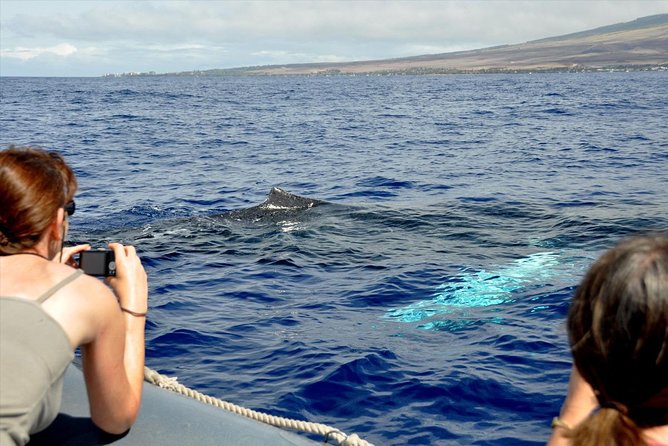
After leaving Lahaina, the captain heads out to search for the selected wildlife. There is no fixed sightseeing sequence beyond departing from and returning to Lahaina, because the crew follows animal activity rather than a set route.
During the search, stay alert for blows and surface movement. The crew may slow or stop when whales appear, giving everyone a chance to watch. On active days, the raft can move between several locations where whales are surfacing. On quieter stretches, the naturalist’s explanation and the open-water setting fill the time.
The raft’s low profile brings you close to the sea, but it also makes seating important. People in front or along the sides may have a clearer first view. A practical tip is to arrive early and pay attention to the boarding order. One person described sitting in the back after taking the last available places, but also found that the rear position led to more interaction with the captain and naturalist.
The crew may remind people to sit so others can see. That is worth taking seriously. When a whale appears, everyone naturally wants to stand or shift at once. Remaining seated helps keep the raft balanced and protects the sightlines for the rest of the group.
Spray, sun, shade, and what to wear
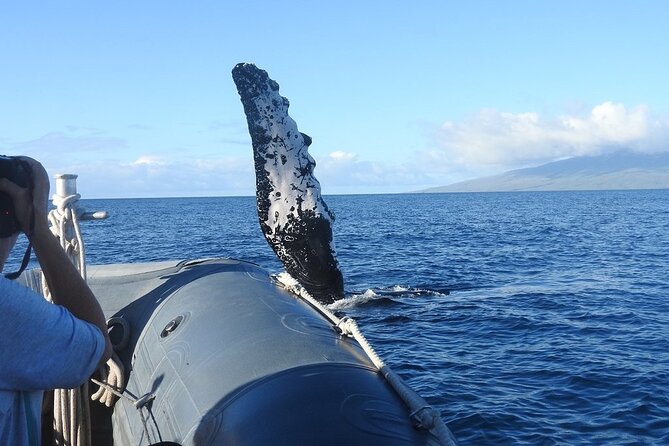
You should expect to get wet. Ocean spray and light rain can reach the raft, and the crew may provide rain ponchos. A poncho is useful, but it will not replace a warm layer if the day is cool or rainy. Wear a jacket underneath when the forecast looks unsettled.
Shade varies by boat. Bring a hat, sunglasses, and reef-safe rub-on sunscreen. Spray sunscreen is not permitted. The sun can feel strong even when a breeze makes the air seem mild, and the water reflects light back toward you.
Life jackets are provided for emergencies but do not have to be worn during the tour. Follow the crew’s instructions about safety and seating. Keep cameras and phones secure, since a low raft and ocean spray are a risky combination for loose electronics.
Bring only what you need. A phone in a waterproof pouch, a small towel, and a light layer make more sense than a large bag. BYOB is allowed, but only in plastic bottles or cans. Glass is not suitable.
Guides, whale facts, and the hydrophone
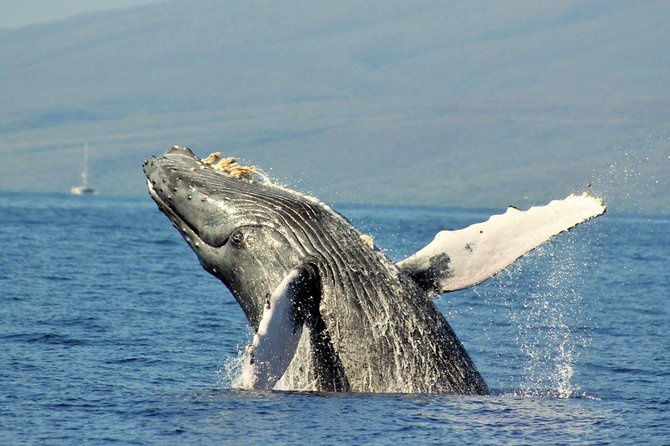
The crew is a major part of the value here. The strongest departures pair a captain who can read the water with a marine naturalist who can explain what you are seeing. Captains Jack, Mark, and Steve, along with naturalists Jess, Olivia, Meredith, and others, have been singled out for clear explanations, friendly energy, and steady wildlife spotting.
The narration covers whales, Maui facts, and the Hawaiian ecosystem. That turns a sighting into something you can understand rather than just photograph. You learn to watch for patterns, including the difference between a quick surface breath and a longer dive.
The hydrophone is especially worthwhile. Whale songs are easy to miss from the surface, but underwater microphones bring those sounds into the raft. The audio can make a quiet period feel purposeful, though the crew cannot promise that every departure will produce the same sound or wildlife activity.
This is also a good fit for curious children over age 3, provided they can handle the boat and follow safety directions. There is no room for babies, strollers, or a casual walk-on approach. The raft setting requires attention.
Is $85.16 a fair price?
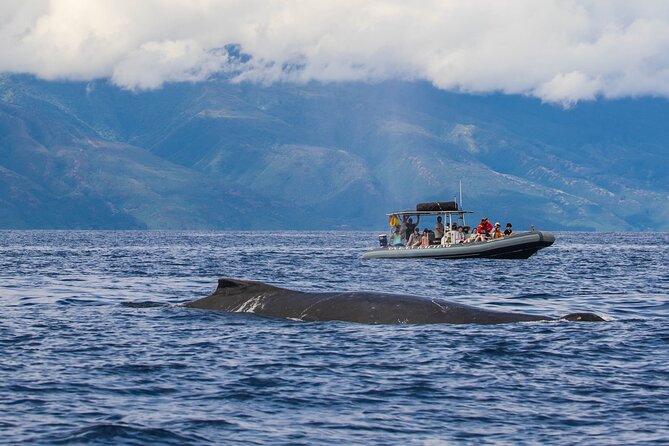
At $85.16 per person, this sits at a reasonable price for a two-and-a-half-hour wildlife outing, especially if you value a small raft and naturalist-led interpretation. You are paying for the boat, captain, marine naturalist, hydrophone access during whale season, and the chance to watch wildlife from a low position.
The price is easier to justify when whales are active. A departure with multiple whales, calves, breaches, and underwater songs can become one of the most memorable parts of a Maui visit. But you should not treat the cost as payment for a guaranteed close approach. Animals are wild, and the tour cannot promise a particular sighting.
Compared with a larger boat, the raft offers a more personal view and usually fewer people between you and the water. The compromise is less shelter, less space to move, and a stronger chance of spray. If you prefer a dry, stable platform with plenty of shade, a larger vessel may suit you better.
The tour is often booked well ahead, with an average booking window of about 37 days. That suggests you should reserve early for a preferred date, especially during whale season.
Who should choose this Lahaina raft tour?
I would choose this experience if you want the wildlife to be the main event and like the idea of sitting close to the sea. It suits couples, families with older children, and solo visitors who prefer a smaller group over a party-style boat.
It is also a good match for photographers, though you need to accept that the raft may rock and spray can be present. A fast camera reaction helps, but patience matters more. The best moments may last only seconds.
I would think twice if you are pregnant, have back or neck injuries, or have limited mobility for boarding. The operator specifically excludes pregnant people, and the boat is not designed for a fully accessible boarding process.
Food allergies also require planning. Snacks on dolphin tours may come into contact with gluten, nuts, peanuts, shellfish, fish, soy, eggs, dairy, or wheat. Tell the crew in advance, bring any required medication, and do not assume onboard food is safe for a serious allergy.
Cancellation and weather planning
You can cancel up to 24 hours before the start time for a full refund. Changes or cancellations made inside that 24-hour window are not accepted for a refund.
The trip depends on good weather. If poor conditions cancel the departure, you are offered another date or a full refund. The same applies if the minimum number of passengers is not reached.
Because the tour leaves on time, build your schedule around it rather than squeezing it between tight plans. Arrive 30 minutes early, allow time for parking, and keep your afternoon flexible in case you need to rebook after weather changes.
FAQ
When is whale watching available?
Whale watching is offered from December through April. During the summer months, the tour focuses on dolphin watching and coastal sightseeing.
How long does the tour last?
The experience lasts approximately 2 hours and 30 minutes, including the trip out from Lahaina and the return to the meeting point.
Where does the tour meet?
You meet at 1223 Front Street in Lahaina, Hawaii. The activity ends back at the same meeting location.
Are children allowed?
Children must be at least 3 years old. Babies and children under 3 are not permitted on the raft.
Do I need to wear a life jacket?
Life jackets are provided for emergencies but are not required to be worn during the tour. Follow the crew’s safety instructions while boarding and underway.
Can I cancel for a refund?
You can cancel at least 24 hours before the start time for a full refund. If poor weather or an insufficient number of passengers cancels the trip, you are offered another date or a full refund.
Should you book it?
Book this tour if eye-level wildlife viewing, a small raft, and naturalist narration matter more to you than shelter and guaranteed sightings. The low boat, hydrophone, and strong captain-naturalist teams create a close, informative way to spend a morning or afternoon off Lahaina.
Skip it if you need a dry ride, easy boarding, or a firm promise of close wildlife encounters. For everyone else, the $85.16 price is fair, particularly in whale season, when a mother, calf, breach, or underwater song can turn a short outing into a lasting Maui memory.
Just added on the water around the USA
- Anna Maria Island: Sunset Dolphin Cruise★ 4.9 · 8 reviews
- Anna Maria Island: Dolphin Cruise★ 4.9 · 8 reviews
- 4 Hour Egmont Key Island Tour With Dolphins & Snorkeling★ 4.0 · 5 reviews
- Hilton Head Island: 90-Minute Dolphin & Nature Tour★ 4.6 · 85 reviews
- Cocoa Beach: Private 2-Hour Dolphin Sightseeing Tour★ 4.7 · 43 reviews
- 2.5 Hour Shell Key Island Adventure – Dolphins And Shells★ 4.0 · 3 reviews
- 2 Hour Tiki Dolphin Sightseeing Tour in Cocoa Beach★ 4.6 · 45 reviews
- Red Boat Tours – Dolphin Odyssey and Sightseeing Tour★ 5.0 · 330 reviews
USA Dolphin Watching Tours, compared.
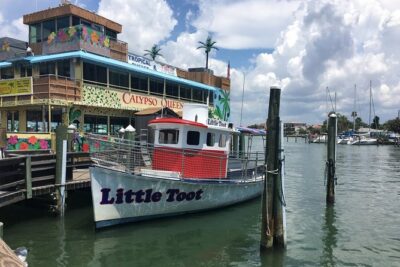
Little Toot Dolphin Adventure at Clearwater Beach
Our review of this trip →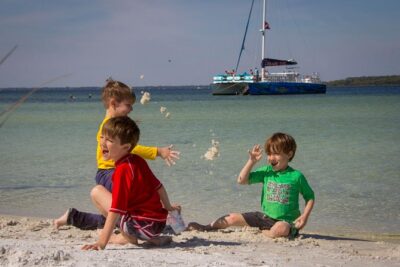
Shell Island Snorkel and Dolphin Catamaran Cruise with Island Time
Our review of this trip →
Dolphin and Manatee Stand Up Paddleboard Tour in Daytona Beach
Our review of this trip →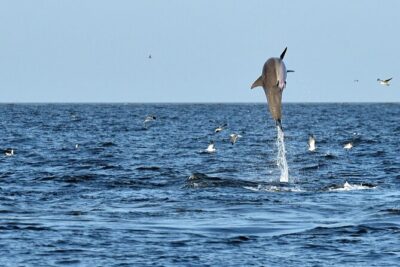
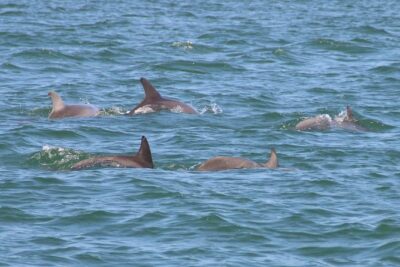
Clearwater Encounters with Dolphins Tour
Our review of this trip →
Dolphin and Manatee Adventure Tour of Fort Myers
Our review of this trip →
Sunset & Dolphin Catamaran Cruise with Island Time
Our review of this trip →
Baywatch Dolphin Tours – Pier 21 Galveston
Our review of this trip →Browse the lists this tour appears in