
Review · WHALE AND
Whale, Dolphin & Penguin Island Cruise
Algoa Bay gives you a real shot at seeing several of South Africa’s most appealing marine animals in one morning. The best moments may be a humpback whale surfacing nearby, bottlenose dolphins riding the bow wave, or African penguins feeding around St. Croix Island.
I like the small maximum group of 20, which makes it easier to see the animals and ask questions. I also like the serious conservation focus, including tree planting to balance the cruise’s carbon footprint and clear discussion of the pressure facing the penguin colony.
The main caution is simple: this is wild nature, not a staged animal show. You may see whales, dolphins, and penguins, but sightings vary with weather, season, sea conditions, and animal behavior.
Key points to know before you book
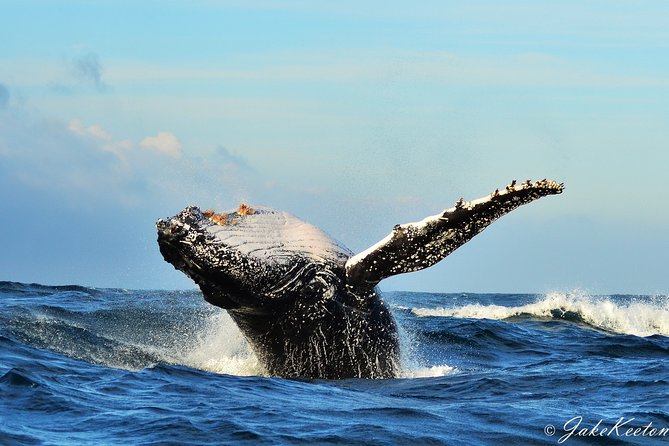
- Whale season runs mainly from June to early December, with humpbacks moving along the coast and southern right whales usually close to shore from July through September.
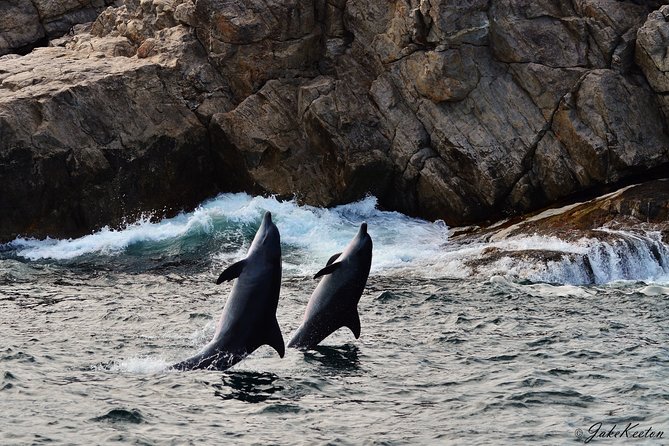
- Bottlenose dolphins can appear year-round, sometimes in groups of 10 to 400 and often close enough to ride in the boat’s bow wave.
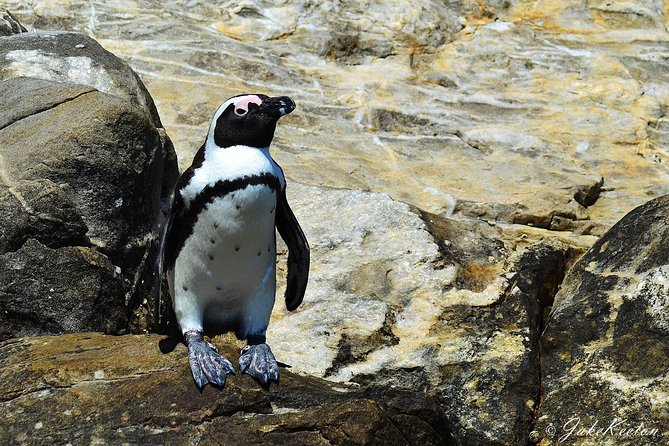
- St. Croix Island is the penguin stop, where you can watch endangered African penguins from the water without landing on the island.
- The boat carries no more than 20 people, giving the crew more room to help with sightings and photography.
- The tour leaves once a day at 8am, so plan around that early start and allow time to reach the yacht club.
- The experience lasts about four hours, ending back at Nelson Mandela Bay Yacht Club in Port Elizabeth, now also called Gqeberha.
Setting out from Port Elizabeth at 8am
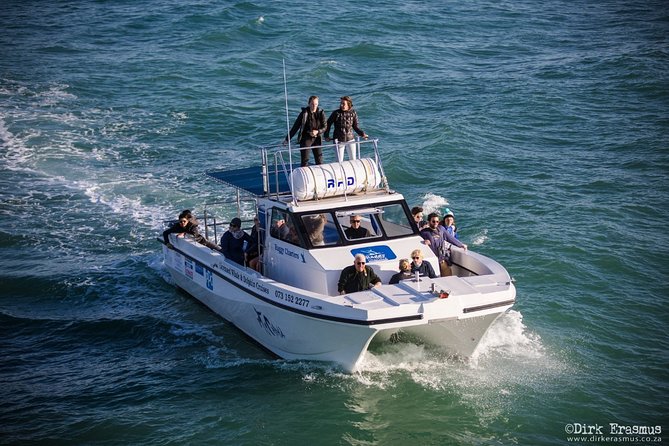
Your morning begins at Nelson Mandela Bay Yacht Club, at Dom Pedro Jetty in Port Elizabeth Harbour, Gqeberha Central. The crew gives you a short safety briefing before taking you into Algoa Bay aboard a twin-engine catamaran.
That briefing matters. This is an open-water trip, and conditions can change. The boat has life jackets for all ages, and the crew places clear emphasis on safety and careful boat handling. One particularly useful aspect of the setup is the boat’s size: it is small enough to feel personal, but a twin-engine catamaran gives the skipper a practical platform for a four-hour outing.
The tour runs once a day, starting at 8am. That fixed schedule is worth noting if you are visiting Port Elizabeth on a tight timetable, but the morning departure also gives you a good block of daylight for wildlife watching. The activity returns to the same jetty, so you do not need to arrange a second pickup point.
The trip is designed for a maximum of 20 people. That number can make a real difference at sea. You have a better chance of getting a clear view over the side, and the crew can spend more time explaining animal behavior instead of managing a large crowd.
More Whale and Dolphin Watching Tours in the world:
- Tenerife: Eco-Yacht Whale and Dolphin Watching and Swimming
★ 4.7 · 15,619 reviews - Los Cristianos Respectful No-Chase Whale and Dolphin Safari
★ 4.6 · 12,782 reviews - From Funchal: Ecological Catamaran Dolphin Whale Watching
★ 4.5 · 8,204 reviews
Algoa Bay and the search for whales
The first major part of the outing is not a single dock or island stop. It is the time spent moving through Algoa Bay and watching the water. You may need patience. A whale can surface only briefly, and the crew must balance the search with respectful wildlife viewing.
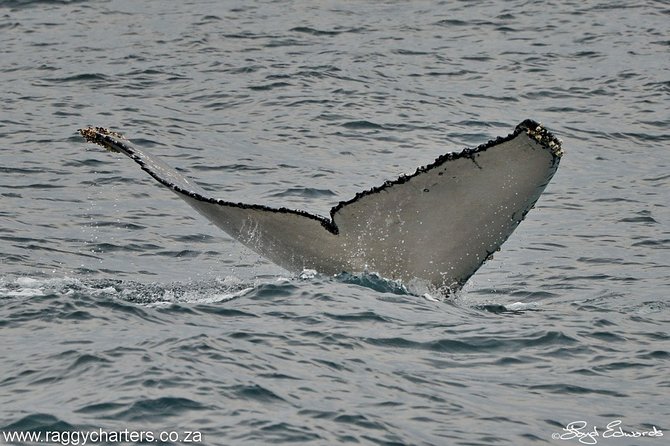
Humpback whales are usually seen in Algoa Bay from June through early December. From June onward, they move along the coast toward breeding grounds farther up Africa’s east coast. From October, some return south with calves. That makes the later part of the season especially appealing if you hope to see a mother and young whale together, although no sighting is promised.
Southern right whales are generally found closer to shore from July through September. You may also spot Bryde’s whales or minke whales, but those sightings are less predictable. The boat’s slower pace helps here. Instead of racing from one advertised animal to the next, the crew can spend time scanning the bay and responding to what appears.
The wildlife search is one of the tour’s strengths, but it is also where you need realistic expectations. A whale watching trip can produce a close encounter, yet it can also involve long stretches of looking at open water. Keep your camera ready, but do not spend the whole trip staring through a small screen. The animal may surface several metres away and vanish before you frame the shot.
Dolphins close to the catamaran
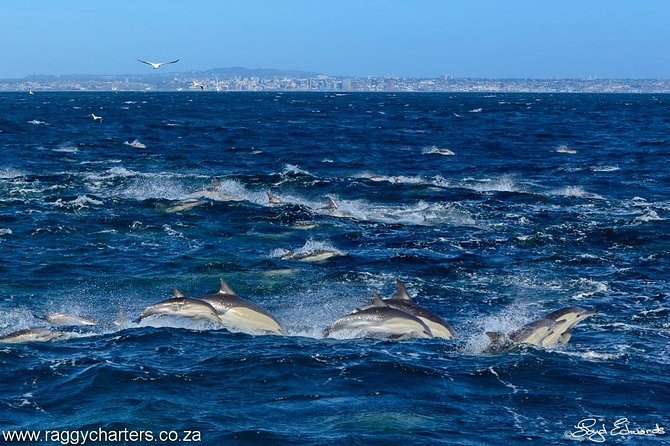
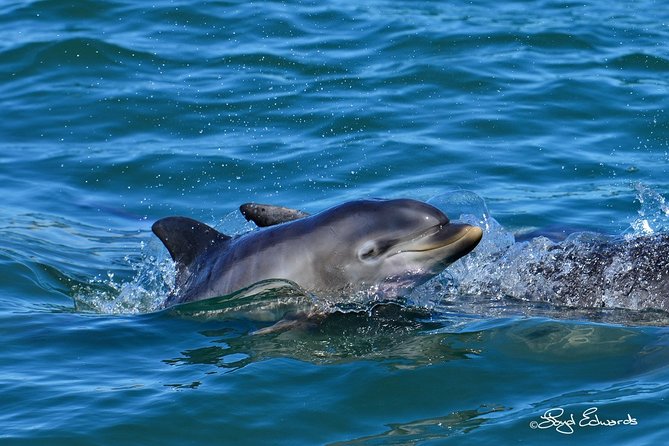
Dolphins are the most dependable marine sighting in the bay. Indo-Pacific bottlenose dolphins can be seen throughout the year, often in groups ranging from 10 to 400. They favor shallow water near beaches and around St. Croix Island, and they may come directly toward the boat to ride the bow wave.
This is likely to be one of the most enjoyable parts of the cruise because it combines movement, sound, and close viewing. A pod traveling beside the catamaran can stay with you for a while, giving you repeated chances to watch the animals surface and change direction.
Common dolphins are another possibility. They often travel farther out, sometimes in groups of 1,000 to 2,000, and move at high speed while following large baitfish shoals. If the boat reaches those outer areas, the scale of the pod can be impressive, though fast-moving dolphins are harder to photograph than bottlenose dolphins near the bow.
Algoa Bay is also home to humpback dolphins. Seeing one is less certain, but the range of possible species adds interest to the trip. The guides can help you distinguish between them and explain why different dolphins favor different parts of the bay.
If you are taking photographs, stand or sit where you have a broad view of the water rather than concentrating on one side. The crew works to position the boat so everyone can see, but animals do not follow a schedule or appear on command.
St. Croix Island and the African penguin colony
St. Croix Island is the cruise’s most distinctive stop. You do not land on the island. Instead, you watch the penguins from the boat, which lets you see them in their coastal setting while avoiding extra disturbance to the colony.
The island is home to an important African penguin breeding colony. The information provided for this outing places the population at about 12,000 birds and notes a loss of 70 percent over 10 years. Those figures give the stop more weight than a simple photo opportunity. You are looking at a threatened species in a place that matters to its survival.
The African penguin breeding season reaches its peak from March through May. At that time, you may be able to see chicks from the boat. The timing is useful if penguins are your main goal, though adults can be present outside the peak season as well.
Penguin numbers and activity can vary. You might see birds standing on the island, swimming nearby, or hunting for fish. You should not expect every visit to produce a large crowd of penguins at the shoreline. Food supply and broader ocean conditions affect where the birds spend their time. One important local issue is overfishing, which has contributed to pressure on the colony.
St. Croix and nearby Brenton Island also support African black oystercatchers, white-breasted cormorants, and Cape cormorants. The island group, along with the Bird Island group, forms part of Addo Elephant National Park, allowing rangers to patrol the area. The conservation message is not an add-on here. It explains why the island matters and why the boat keeps a respectful distance.
More Dolphin Watching Cruises in the world:
- Funchal: Dolphin and Whale Watching Catamaran Cruise
★ 4.5 · 5,697 reviews - Costa Adeje: Whale & Dolphin Eco-Cruise with Snacks & Drinks
★ 4.6 · 5,096 reviews - Gran Canaria: Catamaran Dolphin Watch Cruise with Snorkeling
★ 4.4 · 4,761 reviews - Los Gigantes: Dolphin & Whale Watching Cruise with Swim Stop
★ 4.7 · 4,539 reviews
Seals, seabirds, and the extra sightings
The bay may offer more than the three headline animals. Cape fur seals can appear around the islands or in the open water. They may be resting, swimming, or gathering near productive feeding areas.
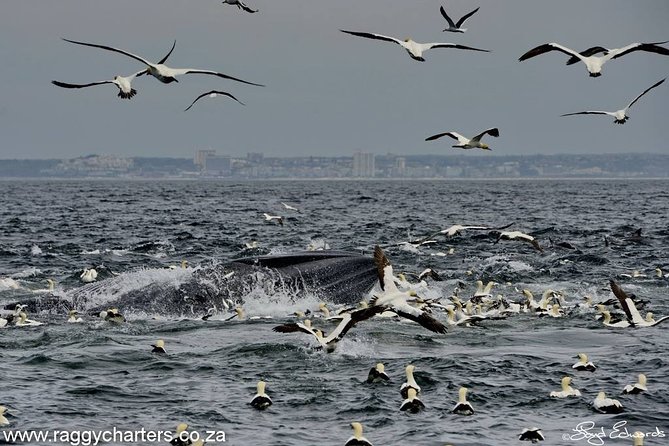
You also have a chance of seeing several seabirds. Cape gannets, terns, petrels, skuas, shearwaters, and albatrosses are all listed as possible sightings, along with white-breasted and Cape cormorants. Pelagic birds can be difficult to identify from a moving boat, so the guide’s explanation is useful. Watch how the birds fly, where they sit, and whether they are feeding near baitfish.
Sharks are another possibility, with several species found in the bay. A hammerhead shark has been seen during one outing, but that should be treated as a lucky extra, not a planned part of the route.
These additional sightings make the cruise more worthwhile even when whales are absent. You are learning how the bay works as a food chain. Baitfish attract dolphins, seabirds, and larger whales, while islands provide resting or breeding areas for penguins and other birds.
A slower, more personal style of wildlife watching
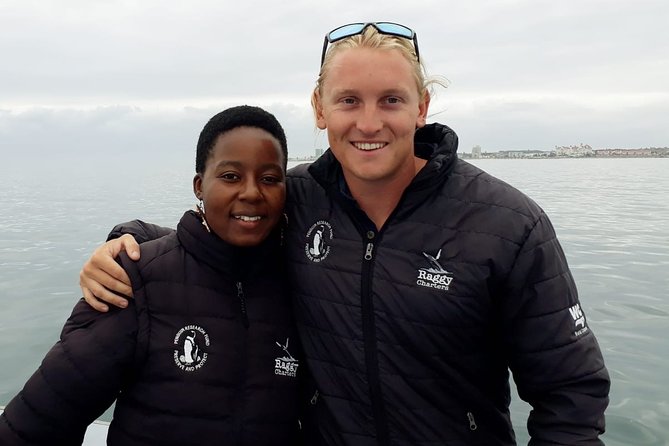
This cruise is built around a slower pace rather than a quick circuit. That suits anyone who wants time to ask questions about conservation, behavior, and identification. The crew includes conservation-focused guides and skippers, and Jake is named in the feedback as one of the people who has led the educational side of the trip.
The crew’s role is especially important when the sea becomes choppy or the weather turns wet. You can still have a worthwhile outing in gray conditions, but visibility and comfort may change. The crew’s attention to safety and boat handling helps, yet you should dress for exposure and accept that the sea may not feel calm.
A small group also changes the mood. You are not packed into a large sightseeing vessel with a running commentary aimed at the back rows. The format leaves more room for direct questions and gives the crew a better chance to point out what is happening.
The tradeoff is that a small boat can feel more exposed than a large covered vessel. If you are prone to motion sickness or uncomfortable on open water, think carefully before booking. The tour information asks you to judge your own health and fitness, so take that advice seriously.
What $185.19 buys you
At $185.19 per person, this is not the cheapest way to spend a morning in Port Elizabeth. The value comes from the combination of a four-hour cruise, a small group, a specialist crew, and access to marine wildlife that you cannot see from land.
You are paying for more than a boat ride to St. Croix Island. The route covers whales, dolphins, penguins, seals, seabirds, and the wider ecosystem of Algoa Bay. The slower approach also means you are not rushed through a short photo stop.
The price makes the most sense for someone who cares about the quality of the experience rather than simply ticking off penguin viewing. It is also a practical choice for a wildlife-focused visit to Gqeberha, especially if you have limited time and want several possible sightings in one outing.
Still, the price does not buy guaranteed whales or a certain number of penguins. Wildlife trips are always partly a bet on conditions. If you need a fixed schedule of animal encounters, this will feel expensive. If you value expert interpretation, conservation information, and a smaller boat, the cost is easier to justify.
One useful point is that the cruise has been used by people arriving on cruise ships, with the same boats available outside a ship excursion arrangement. Booking independently may offer better value than taking a more expensive cruise-line excursion, but you must manage your own timing carefully.
Who will enjoy this cruise most
I would recommend it to anyone who wants an active wildlife morning rather than a passive sightseeing ride. Families can join because there is no age restriction and life jackets are available for all ages. Children who enjoy animals may find the dolphins and penguins especially rewarding, though parents should prepare them for waiting between sightings.
It suits photographers, birdwatchers, conservation-minded visitors, and anyone interested in marine biology. You do not need specialist knowledge. The crew explains what you are seeing and why the animals gather in particular parts of the bay.
It can also work for visitors with limited mobility, provided they can board with assistance from family and crew. The activity provider says disabled participants are welcome under those conditions. Because boarding and the sea journey still require personal judgment, contact the operator if you have specific mobility or health concerns.
This may not suit you if you dislike boats, need guaranteed calm weather, or want to sleep late. The 8am start and open-water setting are central parts of the experience, not minor details.
Practical details that affect your morning
Confirmation is provided when you book, and the meeting point is near public transportation. Allow enough time to reach Nelson Mandela Bay Yacht Club before the 8am departure. The trip returns to the same location after about four hours.
The activity depends on suitable weather. If poor conditions force cancellation, you are offered another date or a full refund. If the minimum number is not reached, the same options apply.
You can cancel for a full refund up to 24 hours before the start time. Changes or cancellations made inside that window are not accepted for a refund. Since this is a once-daily activity, keep your schedule flexible if seeing the wildlife cruise is important to you.
The operator also runs a tree-planting campaign to balance the cruise’s carbon footprint. No wildlife tour is impact-free, but that effort, together with the conservation work around the island group, gives the outing a clearer environmental purpose.
Should you book the Whale, Dolphin and Penguin Island Cruise?
Book it if you want a serious marine wildlife outing from Gqeberha, especially during the whale season or the March to May penguin breeding period. The combination of a 20-person limit, a four-hour route, and a crew focused on conservation gives you a better setting for questions and close observation than a large sightseeing boat.
I would be cautious only if your budget is tight or you need guaranteed sightings. For everyone else, the strongest reason to go is the range of possibilities: bottlenose dolphins may ride beside the bow, penguins may gather around St. Croix Island, and a whale or seal may turn an already worthwhile morning into a memorable one.
FAQ
Where does the cruise start and finish?
The cruise starts and finishes at Nelson Mandela Bay Yacht Club, Dom Pedro Jetty, Port Elizabeth Harbour, Gqeberha Central, Gqeberha, 6001, South Africa.
What time does the cruise leave?
The meeting and departure time is 8am.
How long does the experience last?
The cruise lasts approximately four hours.
How many people can join the boat?
The activity has a maximum of 20 participants.
Can children and disabled participants join?
There is no age restriction, and life jackets are available for all ages. Disabled participants who can board with assistance from family and crew are welcome.
What happens if bad weather cancels the cruise?
You are offered a different date or a full refund if poor weather causes cancellation. The same options apply if the minimum number of participants is not reached.
Just added on the water around the world
- Bali Bliss: Dolphin Lovina Private Expedition★ 4.1 · 6 reviews
- Arrábida Natural Park/Sesimbra: Dolphin Watching★ 5.0 · 2 reviews
- Auckland: Bay of Islands Day Tour with Dolphin Cruise★ 5.0 · 11 reviews
- Auckland: Tikapa Moana Whales, Dolphins and Islands Cruise★ 3.9 · 292 reviews
- Anna Maria Island: Sunset Dolphin Cruise★ 4.9 · 8 reviews
- Anna Maria Island: Dolphin Cruise★ 4.9 · 8 reviews
- Always private 4 hour – Sail- dolphin Yacht Charter-paddle★ 4.5 · 7 reviews
- Alghero: Dolphin Watching Tour with Marine Researcher★ 4.7 · 172 reviews
Whale and Dolphin Watching Tours, compared.
Eco-Yacht Whale and Dolphin Watching and Swimming
Our review of this trip →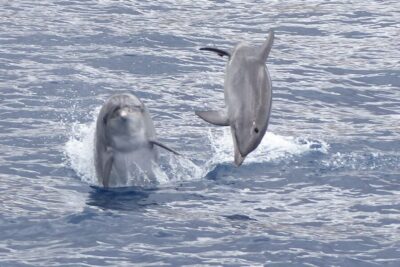
Los Cristianos Respectful No-Chase Whale and Dolphin Safari
Our review of this trip →
Ecological Catamaran Dolphin Whale Watching
Our review of this trip →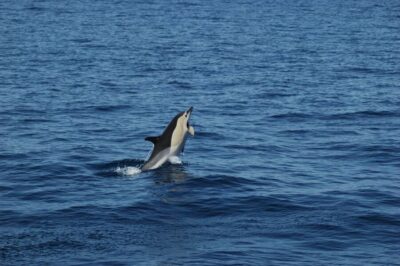
Dolphin and Whale Watching Catamaran Cruise
Our review of this trip →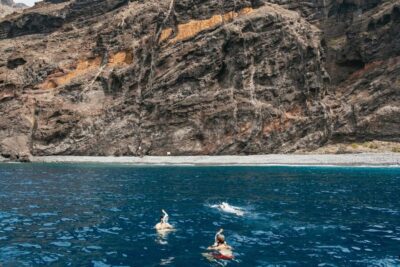
Whale & Dolphin Eco-Cruise with Snacks & Drinks
Our review of this trip →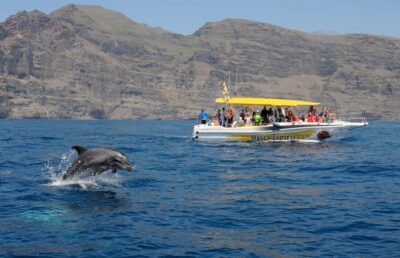
Dolphin & Whale Watching Cruise with Swim Stop
Our review of this trip →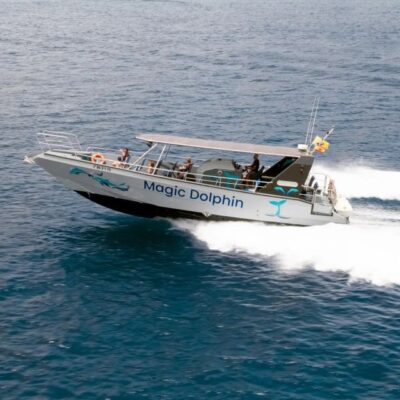
Morro Jable: Dolphin & Whale Watching Cruise, Drinks & Swim
Our review of this trip →
From Ponta Delgada: Whale and Dolphin Watching Trip
Our review of this trip →Browse the lists this tour appears in