
Review · LISBON
Lisbon: Dolphin Watching with Marine Biologist – Small Group
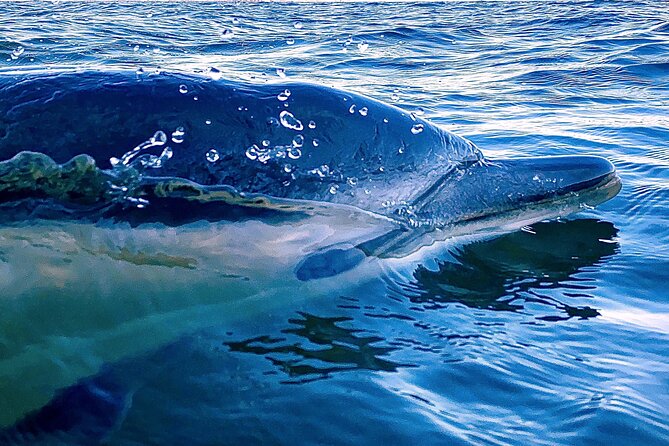
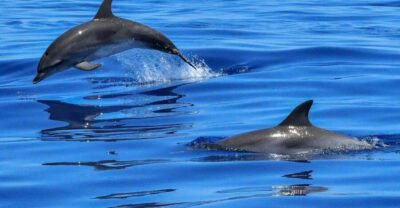
The best part of this Lisbon outing is the chance to see wild dolphins in open water, not animals performing on command. When conditions cooperate, you may watch common dolphins feed beside the boat, spot porpoises or bottlenose dolphins, and possibly see a whale or sunfish. When they do not, you still get a fast ride past Lisbon’s riverfront monuments and a clear explanation of the sea around Portugal.
I like the marine biologist on board, who puts dolphin behavior and ocean protection into plain language. I also like the small-boat feel, which can bring you close to the action and lets the crew respond quickly when a pod appears. The tradeoff is simple: this is wildlife watching, not a guaranteed show, and a three-hour search can end without a dolphin sighting.
Key points to know before you book
- Wild dolphins, not a staged encounter: Sightings can include common dolphins, bottlenose dolphins, porpoises, and, on rare days, whales or sunfish.
- A marine biologist leads the ride: Guides such as Vanessa, Ines, Francisco, Joao, Juan, and Alfonso have been praised for clear explanations and careful handling of wildlife.
- Lisbon’s monuments are part of the trip: You pass the 25 de Abril Bridge, Torre de Belém, and MAAT from the water.
- The speedboat ride is lively: Waves can splash over the bow, so bring clothing and shoes that can get wet. The ride is not suited to people with back problems.
- The group is capped at 34: Some departures use a boat carrying about 16 people, though the advertised maximum is 34.
- Weather matters: Poor conditions can cancel the trip. You will be offered another date or a full refund if that happens.
Why this is more than a sightseeing cruise
Lisbon is often best understood from the Tagus. The city’s waterfront opens up as you leave Doca de Santo Amaro, and the boat gives you a fresh angle on monuments that can feel familiar from land.
But the main purpose is not a monument checklist. The crew uses the ride to explain the local ecosystem, dolphin behavior, and the pressures facing marine life. You might learn why birds matter when searching for dolphins, how pods feed, or why the crew may stop to remove plastic from the water.
That mix gives the outing some substance. You are not simply racing offshore and hoping for a photograph. You are learning how the crew searches for animals that live on their own terms.
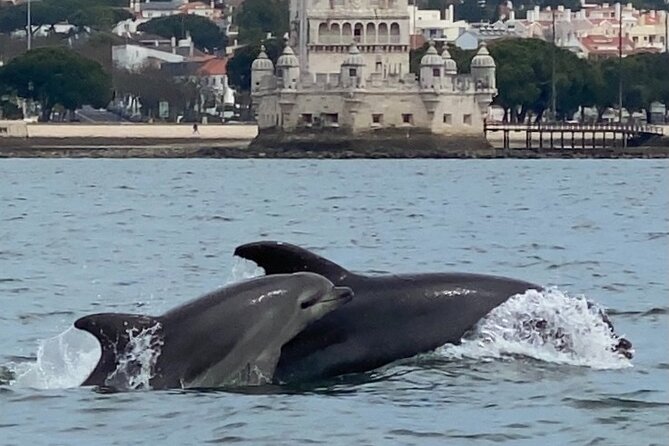
The dolphin sightings can be remarkable. Pods have been seen feeding beside the boat, surrounding it for a time, and swimming close enough for you to watch their movement clearly. One outing produced common dolphins, bottlenose dolphins, porpoises, and a sunfish. Another included a whale sighting. Those are exceptional days, not promises, but they show what can happen in these waters.
I would book this with the right expectation: the marine life is the goal, not a guarantee. If you need a certain sighting for the trip to feel worthwhile, choose a standard city cruise instead.
More Dolphin Watching with a Marine Biologist in Portugal:
- Portimão: Benagil Caves & Dolphins Watching with Biologist
★ 4.8 · 3,795 reviews - Lagos: Combo Dolphin and Benagil Tour with Marine Biologist
★ 4.7 · 2,352 reviews - Lisbon: Dolphin Watching with Marine Biologist
★ 4.9 · 1,853 reviews
Leaving Doca de Santo Amaro on the Tagus
The meeting point is Terra Incógnita at Doca de Santo Amaro, in warehouse 17, near the waterfront. The activity returns to the same place after roughly three hours, which makes it easy to fit into a day of sightseeing.
The early part of the trip gives you time to settle into the boat and look across the Tagus. The water, the bridges, and the west side of Lisbon create a strong opening view. You may also receive a safety briefing and an introduction to the marine life you could encounter.
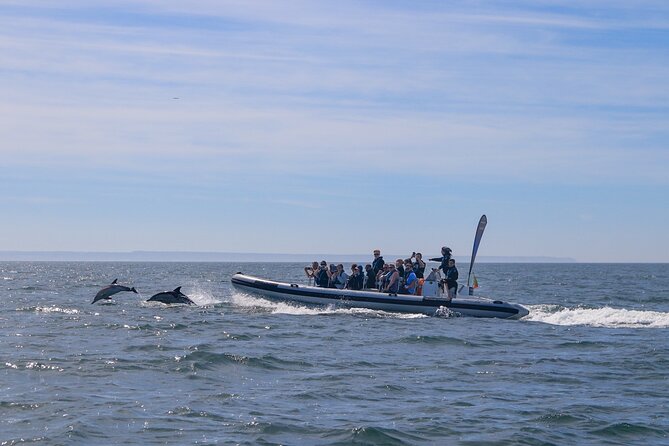
The boats used for this experience are speedboats, not large covered sightseeing vessels. That matters. You feel the movement of the water, and the ride can be part of the fun. It also means you should take the conditions seriously. Several people found the ride exciting, while others noted that waves can splash over the bow.
Wear layers, especially outside the warmest part of summer. A coat with a hood and light gloves were useful on a late-September departure. Shoes should be allowed to get wet, and loose hats or sunglasses may need extra care. One particularly wet seat was at the back left side of the boat, according to a family experience, so you may want to ask the crew where the spray is strongest.
You need a moderate level of physical fitness. The operator also states that people with back or neck conditions cannot take part, since the speedboat can move sharply over waves. This is not a gentle harbor float.
Ponte 25 de Abril from below
The first major landmark is Ponte 25 de Abril, Lisbon’s famous red suspension bridge. From the Tagus, you see its scale in a way that is hard to grasp from the streets.
The bridge is not just background scenery. It helps you understand the shape of the city and the river’s role in Lisbon’s daily life. The boat passes beneath or near this section of the waterfront before heading toward Belém and then farther out in search of dolphins.
This part also helps explain why the trip is a useful sightseeing option even on a quiet wildlife day. If the animals keep their distance, you have still seen Lisbon from an unusual position and received commentary about the sights. The crew often points out landmarks during the ride, adding context without turning the trip into a formal city tour.
The pace is quicker than a traditional sightseeing cruise. You are moving over open water, so views appear and disappear quickly. Keep your camera ready, but do not spend the entire ride looking through a screen. The best moments may be a sudden pod ahead or a dolphin surfacing beside the boat.
Belém Tower and the western waterfront
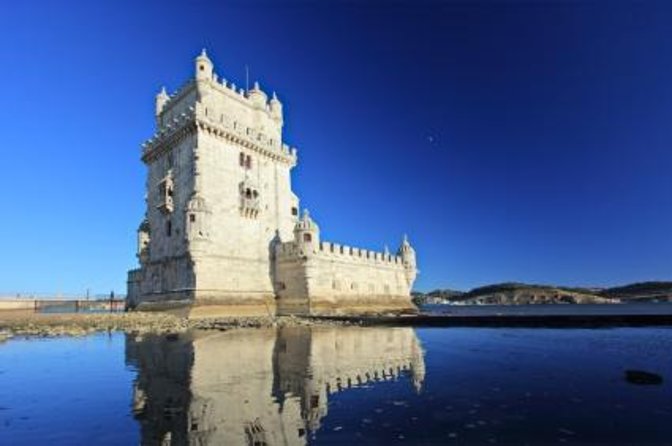
Torre de Belém is one of Lisbon’s most recognizable monuments, and it takes on a different character from the river. The small fortified tower marks the western edge of the historic waterfront and looks especially striking when viewed from the water.
The boat also passes MAAT, the Museum of Art, Architecture and Technology. Its curved riverside form provides a sharp contrast to Belém’s older stone architecture. Seeing both in sequence gives you a quick visual lesson in Lisbon’s old and new waterfront.
This is where the experience works well for someone who wants more than wildlife. You are not spending the full three hours in open ocean with nothing else to see. The route includes recognizable landmarks, and the marine biologist can connect the city to the water around it.
Still, do not confuse this with a dedicated Belém sightseeing tour. You will see these places from the boat, not walk ashore or visit the interiors. If Torre de Belém or MAAT is high on your list, plan a separate visit on land.
More Small-Group Dolphin Trips in Portugal:
- Lisbon: Dolphin Watching with Marine Biologist – Small Group
★ 4.9 · 867 reviews - Small Group Dolphin and Wildlife Watching Tour in Faro
★ 5.0 · 578 reviews - Small Group 2 Hour Dolphin Cruise with Snorkeling to Shell Key
★ 5.0 · 1,523 reviews - Small Group Dolphin Kayak Eco-Tour
★ 5.0 · 351 reviews
Searching for dolphins in the Tagus and Atlantic
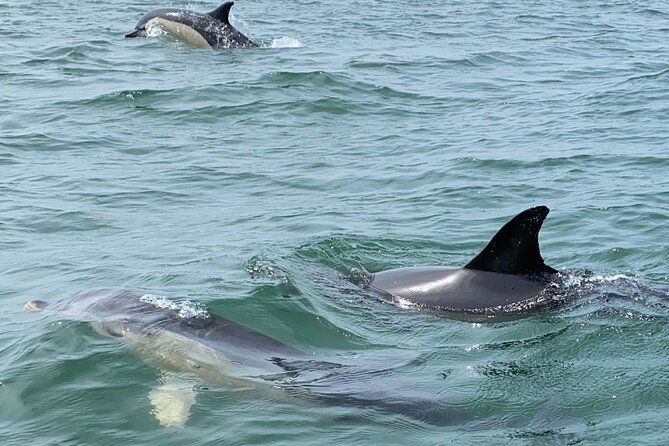
The most important part of the experience begins when the crew starts reading the water. The marine biologist watches for signs that may lead to dolphins, including the movements of sea birds and reports about where marine life has recently been active.
The boat may travel into the Atlantic after leaving the river. This search can take time. On one disappointing outing, the group spent about two and a half hours looking without seeing a dolphin. The crew continued to monitor the area, but nature simply did not cooperate.
That possibility deserves clear attention. The tour is called dolphin watching, but no wild animal can be scheduled. The company explains this before departure and may offer a second attempt when there is availability. A free repeat is not useful to everyone, especially if you are leaving Lisbon the next day, so consider booking early in your stay if seeing dolphins is a major priority.
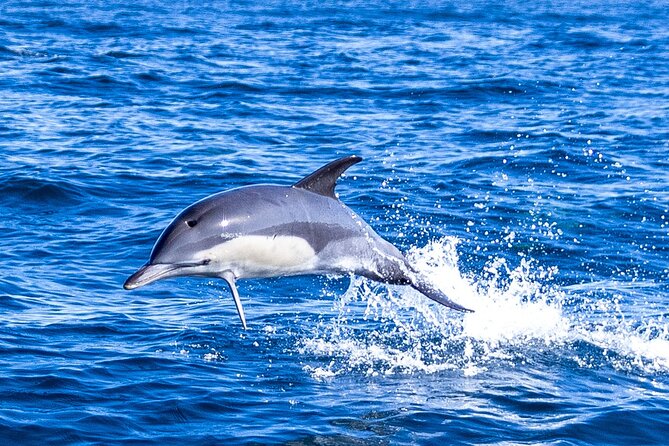
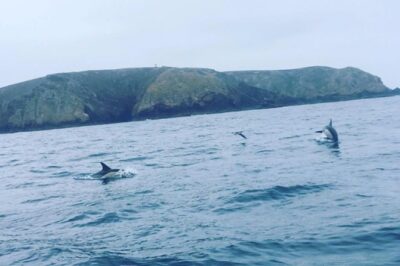
On a successful outing, the payoff can be extraordinary. Common dolphins have been seen in groups of roughly 10 to 15, with young dolphins among them. Larger groups of around 30 have also appeared. Some pods have fed beside the boat, while others have surrounded it for a time.
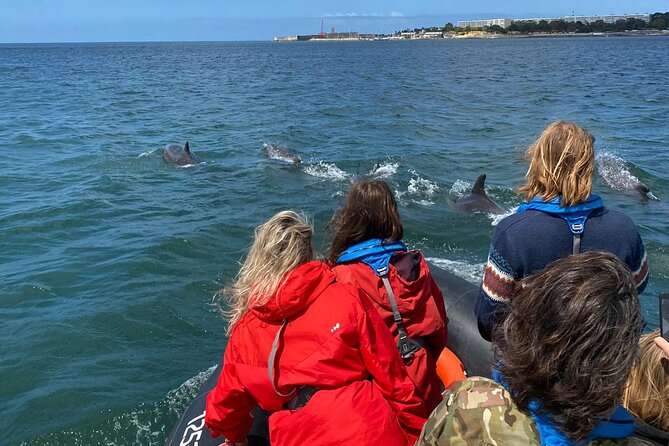
The crew’s approach is another important point. The dolphins are not chased or forced into contact. The boat slows or holds position so you can observe their natural behavior. A marine biologist may explain the differences between species and point out how the animals move and feed.
The small boat can help with visibility. You have fewer people blocking your view than on a large cruise vessel, and the captain can respond quickly when dolphins surface. Yet a small boat also means less room to move around, and you should expect spray, wind, and a lively ride.
What the marine biologist adds
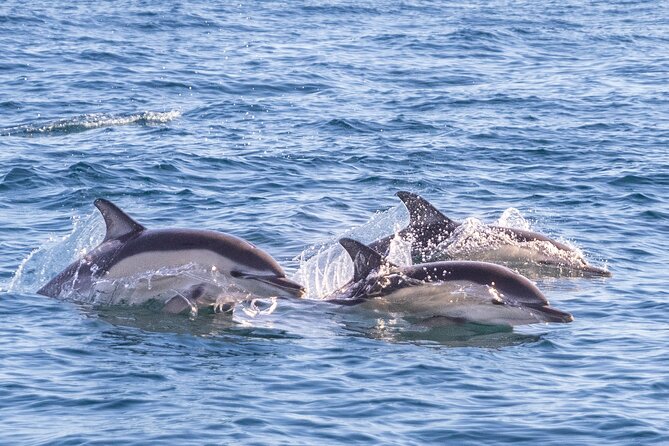
The guide is the heart of the educational side. Several guides have been praised by name, including Vanessa, Ines, Francisco, Joao, Juan, and Alfonso. The exact team can change, but you should expect a marine biologist paired with a skipper.
A good guide does more than name the animals. You may hear about local ecosystems, dolphin species, feeding habits, and ways to reduce harm to the ocean. The explanations are delivered in English, and the strongest guide comments describe a patient speaker who answers questions clearly and uses humor without losing focus.
This matters most when sightings are brief. A dolphin may surface only a few times or stay far from the boat. With useful commentary, the experience does not depend entirely on getting a perfect photograph.
The conservation side can become practical, too. On one outing, the crew stopped to remove a large mass of plastic floating in the sea. Several people helped bring it aboard, and the group later found dolphins again. That is not a planned feature you should expect every time, but it shows the kind of responsible action the crew may take when conditions require it.
The stop can also change how you see the ocean. A wildlife trip is more meaningful when it acknowledges both the beauty of the sea and the damage caused by rubbish.
The ride, the weather, and what to bring
The speedboat is a major part of the appeal. You get motion, wind, and the feeling of heading into open water rather than simply circling the harbor. Teenagers and older children may find this thrilling, and some families enjoyed the waves as much as the animals.
It is not ideal for everyone. A Dutch-speaking family specifically warned that the ride was demanding for small children. Back problems are also a serious concern. If you prefer a calm boat with a shaded seat and steady footing, choose another way to see Lisbon from the river.
Bring a warm outer layer even on a pleasant day. The boat feels colder once it picks up speed, and the return trip can be breezy. Wear footwear that can handle spray, and secure anything loose.
The safety side receives strong praise. Life jackets are available, and the skipper is responsible for the boat while the marine biologist manages the wildlife viewing and commentary. Listen carefully when the crew explains where to sit and how to move around. The front can provide a better view, but it also requires care when the boat is moving.
Is $78.61 a fair price?
At $78.61 per person, this is not the cheapest way to see Lisbon. The value depends on what you want from the outing.
You are paying for about three hours, a speedboat ride, a marine biologist, a skipper, wildlife searching, and waterfront sightseeing. The price also includes the chance to see several types of marine life in the wild rather than at an aquarium. On a day with dolphins close to the boat, porpoises, or a whale sighting, the cost can feel very reasonable.
The value is less convincing if you are buying a guaranteed dolphin encounter. There is no guarantee, and one group returned without seeing any dolphins. In that case, the experience became a boat ride with ecological commentary and monument views. Those elements have value, but they may not match your main reason for booking.
A useful strategy is to schedule this early in your Lisbon stay. If weather cancels the trip or the animals remain hidden, you may have time to try again. The company may offer a complimentary second outing after a no-sighting trip, but availability and your schedule will decide if that helps.
The tour is booked, on average, about 13 days ahead. That suggests you should not leave it until the last minute if your dates are fixed.
Who will enjoy this Lisbon experience?
I would choose this for adults, couples, families with older children, and anyone who enjoys wildlife more than polished entertainment. It works particularly well if you want a change from churches, museums, and tiled streets.
Children can enjoy it, but age alone is not the main issue. Your child should be comfortable with speed, wind, spray, and a boat that moves over waves. One 11-year-old and one 13-year-old had a wonderful time, while the ride may be too rough for very small children.
This is also a good fit for people who care about conservation. The marine biology talk gives the outing a purpose beyond the photograph, and the crew’s attention to plastic pollution adds a useful real-world lesson.
I would skip it if you have back or neck problems, dislike rough water, or need a guaranteed result. I would also think twice if your Lisbon schedule is so tight that a weather cancellation would cause trouble.
Booking, cancellation, and practical details
The tour is offered in English and uses a mobile ticket. Public transportation is nearby, and the activity starts and ends at Terra Incógnita, Doca de Santo Amaro armazém 17.
You can cancel for a full refund up to 24 hours before the start time. Changes or cancellations made inside that 24-hour window are not accepted for a refund. If poor weather forces the company to cancel, you will be offered another date or a full refund.
The maximum group size is 34 people. Some boats described during the experience held around 16 people, so the actual feel may be more intimate than the official maximum suggests. Ask the crew about seating if you are concerned about spray or want the best view.
Should you book this dolphin tour?
Book it if you see wildlife watching as an adventure, not a promise. The combination of a marine biologist, open-water ride, Lisbon landmarks, and the possibility of close dolphin encounters gives the outing real appeal.
I especially like that the experience treats dolphins as wild animals and makes room for ecology, not just photographs. I also like the chance to see the 25 de Abril Bridge, Belém Tower, and MAAT from the Tagus in one trip.
Just bring a coat, shoes that can get wet, and realistic expectations. If the sea is calm and the pods are active, you may come away with one of Lisbon’s most memorable experiences. If the animals stay hidden, you will still have had an informative boat ride, but you may not feel the price was fully earned.
FAQ
How long does the dolphin watching tour last?
The experience lasts approximately three hours and returns to the original meeting point at Terra Incógnita.
Where does the tour start?
It starts at Terra Incógnita, Doca de Santo Amaro armazém 17, 1350-353 Lisboa, Portugal.
Is dolphin watching guaranteed?
No. Dolphins are wild animals, so sightings cannot be guaranteed. The crew uses sea conditions, scientific reports, and bird activity to improve the chances of finding them.
What landmarks can I see from the boat?
The route includes Ponte 25 de Abril, Torre de Belém, and MAAT, the Museum of Art, Architecture and Technology.
Is the tour offered in English?
Yes. The activity is offered in English.
How many people can join the tour?
The maximum group size is 34 people. Some departures use a smaller boat carrying around 16 people.
What happens if bad weather cancels the tour?
You will be offered another date or a full refund if the experience is canceled because of poor weather.
Just added on the water around Portugal
- Madeira : Whales and Dolphins wooden boat excursion★ 4.1 · 247 reviews
- X Plorer – Caves (Benagil) & Dolphins Cruise★ 4.5 · 116 reviews
- Madeira: Whale and Dolphin Watching Tour★ 4.6 · 174 reviews
- From Machico: Madeira Whale and Dolphin Watching Boat Tour★ 4.8 · 225 reviews
- Vilamoura: Boat Tour Dolphin Quest & Marine Life Search★ 4.9 · 71 reviews
- Azores: Swim with Dolphins Atlantic Experience★ 4.4 · 29 reviews
- Vilamoura Tour to Benagil and the Dolphins★ 4.0 · 14 reviews
- Dolphin Watching and Cave Tour from Vilamoura★ 4.0 · 63 reviews
Lisbon Dolphin Watching Tours, compared.
Tagus River Cruise to the Ocean & Dolphin Watching
Our review of this trip →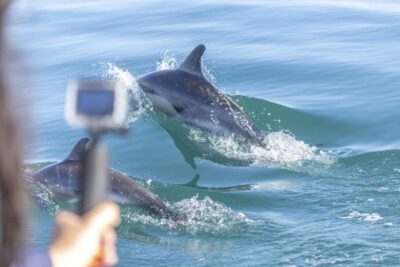
Dolphin Watching with Marine Biologist
Our review of this trip →
Dolphin Watching with Marine Biologist – Small Group
Our review of this trip →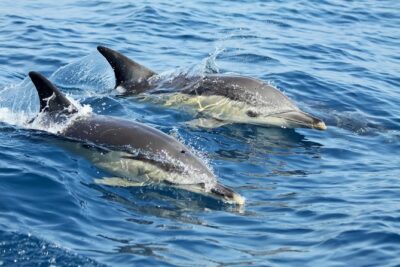
Dolphin Watching with a Marine Biologist – Ocean Safari
Our review of this trip →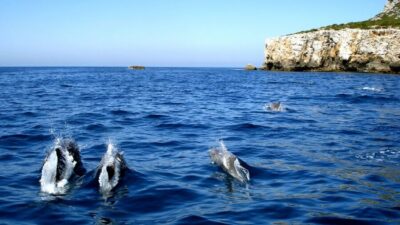
Arrábida Natural Park Dolphin Watching Boat Tour
Our review of this trip →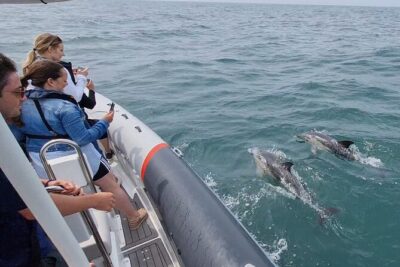
Meet the Lisbon Dolphins – Dolphin Watching in Lisbon
Our review of this trip →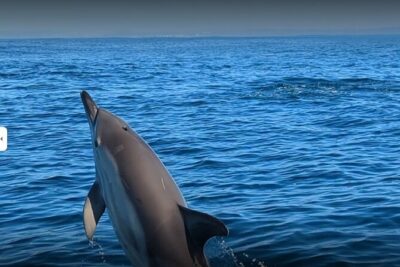
Browse the lists this tour appears in