
Review · MEXICO
Watch and Swim with Dolphins in the Wild
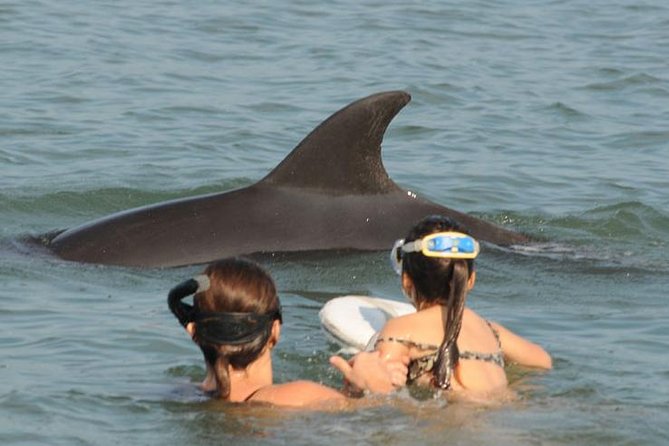
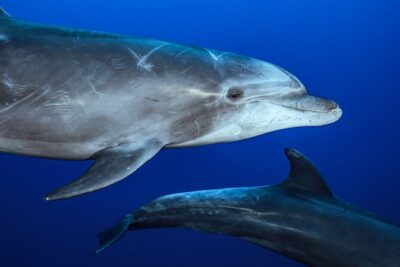
Wild dolphins set the rules here. You leave Marina Vallarta with a biologist guide, listen for pods through a hydrophone, and wait for the right moment to enter the sea. If the dolphins are curious, you may swim beside them. If they are feeding or keeping their distance, you watch from the boat.
I like the tour’s respect for free-ranging animals, and I like the small-group swims, often with three or four people in the water at a time. Guides such as Camilla, Gema, Maru, and Gemma explain dolphin behavior before you go out. The main drawback is simple: swimming is never guaranteed. You may spend much of the morning searching, and wild dolphins do not perform on command.
Key points to know before you book
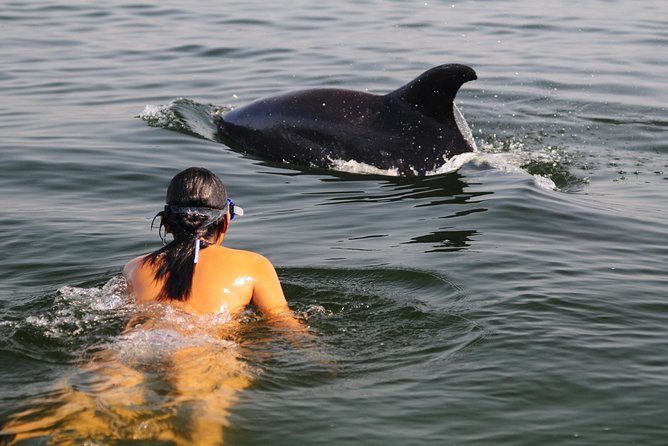
- Wild dolphins choose the encounter: The crew does not feed, train, or call dolphins toward the boat.
- A hydrophone helps locate pods: You search by listening to dolphin sounds, not by using bait or artificial signals.
- Small groups enter the water: People may swim in rotations, giving everyone a better chance to see the animals.
- Whales can be part of the morning: Humpback mothers and calves are sometimes seen in the Bay of Banderas.
- The education matters: Arrive for the pre-trip talk about marine mammals, safety, and respectful behavior.
- Bring your swimsuit and patience: You may need to jump from the boat quickly when the dolphins show interest.
Why this Puerto Vallarta dolphin tour feels different
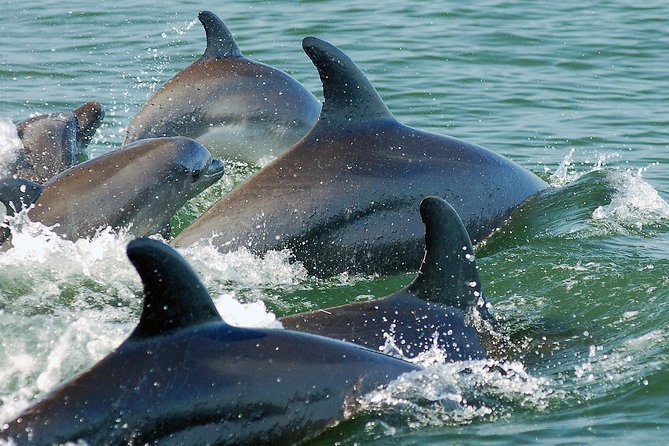
Many dolphin activities depend on trained animals in enclosed pools. This one takes you into the Bay of Banderas to look for bottlenose dolphins that live freely in the sea. That difference is the whole point.
You are not promised a choreographed kiss, a ride on a dorsal fin, or a dolphin that circles the boat on cue. You are promised the chance to watch wild animals and, if they choose to approach, enter the water with them. That makes the experience less predictable, but also more honest.
The tour supports marine ecology research, and the guides explain why the dolphins’ choice matters. If a pod is feeding, caring for a calf, or moving away, the crew should leave it alone. When a group shows interest, the captain positions the boat and the guide directs the swimmers.
That approach gives the morning a useful purpose beyond getting a close photograph. You learn to read the animals rather than treating them like performers.
More Swim with Dolphins in Mexico
- Cancun: Interactive Aquarium – Swim with Dolphins Splash
★ 4.1 · 49 reviews - Puerto Aventuras: Dolphin Swim, Sea Lions, Manatees, & Lunch
★ 4.7 · 33 reviews - Cancun: Interactive Aquarium Ticket and Swim with Dolphins
★ 4.6 · 19 reviews
Starting at Marina Vallarta at 9:00 am
You meet at Opequimar Centro Marino, Av. Paseo de la Marina Sur 214, in Marina Vallarta. The scheduled start is 9:00 am, and arriving on time is important because the educational presentation comes before the boat ride.
The talk covers whales, dolphins, dolphin behavior, and safety. It also sets the right expectations. You are visiting the animals in their home, so the pod decides if and when it comes near. This briefing is not filler. It explains why one group may approach while another continues feeding or disappears below the surface.
The exact crew can vary. Camilla is praised for her energy and clear explanations, while Gema and Gemma are noted for pointing out dolphins and helping people understand their movements. Maru is also described as careful about respecting a pod’s boundaries. Captains including Cesar and Jorge handle the boat and help position it safely.
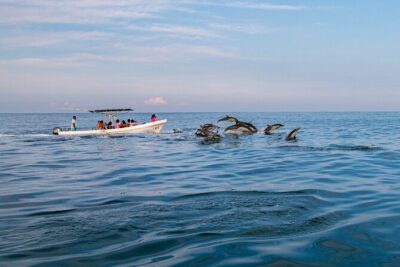
The group can include up to 20 people. Boats used by the operator are described as 27 or 33 feet long, with capacity certified by the harbor master. Expect a working boat rather than a luxury yacht. Seating may be limited, and the outing is active, with people shifting position to watch the sea or prepare to enter the water.
Listening for dolphins with a hydrophone
Once you leave the marina, the crew uses a hydrophone to listen for dolphin sounds. This is one of the most interesting parts of the experience because it gives you a sense of how biologists locate animals beneath the surface.
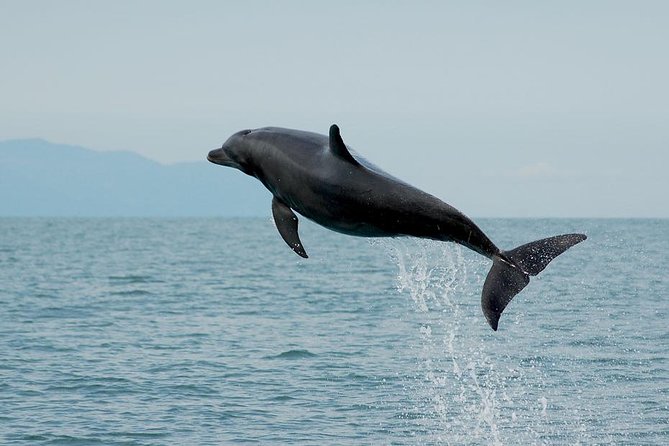
You may see dolphins before you hear them. They can surface near the boat, travel in pods, jump, or move quickly through the water. The crew watches for behavior and listens for signs that a group may be interested in the boat.
Finding them can take time. The boat may travel through several parts of the bay before the crew locates a suitable pod. This is not a nonstop swim session. You are spending part of the morning searching, watching, and learning.
That time matters when you decide if the price is worthwhile. At $105 per person, the cost covers about three and a half hours, a biologist guide, the boat, snorkeling equipment, bottled water, soda, and the wildlife research focus. You are paying for a guided search in the open sea, not a guaranteed personal encounter.
The money-back guarantee on encountering animals offers some reassurance, but read the wording carefully. Seeing dolphins and swimming with dolphins are different outcomes. Animal sightings are expected and covered by the guarantee described for the tour, while an in-water interaction depends on dolphin behavior and sea conditions.
The boat search through the Bay of Banderas
The boat ride is part wildlife outing and part coastal expedition. You may see dolphins traveling beside the boat, then lose sight of them as they move away. You may also spot turtles, rays, and other marine life.
Humpback whales are a frequent highlight when conditions and timing cooperate. Several people describe watching a mother and calf, and one outing included hearing a nearby whale’s song through the hydrophone. These sightings are not guaranteed, but they add real value to a morning that may already include dolphin pods.
Do not expect a polished sightseeing cruise with a fixed route. The captain follows the animals and adjusts the plan. That means the boat can feel purposeful and exciting, but it also means some stretches are simply time spent getting from one sighting to the next.
The tour lasts approximately three hours and 30 minutes overall. One description puts the time on the boat at about three hours, which leaves room for the marina meeting, safety presentation, boarding, and return. The activity ends back at the original meeting point.
Same water, a different boat:
- Whale and Dolphin Watching with a Biologist in Puerto Vallarta
★ 5.0 · 666 reviews - Puerto Escondido: Boat Tour to see Dolphins and Marine Life
★ 4.6 · 467 reviews - Dolphin & Whale Watching in Puerto Escondido
★ 5.0 · 278 reviews - Whale & Dolphin Watching Cruise in Puerto Vallarta All Inclusive
★ 4.0 · 212 reviews
Entering the water in small groups
When a pod appears interested, the guide decides how to organize the swim. People enter in small groups, sometimes three or four at a time, while others watch from the boat. This rotation gives more people a clear chance to see the dolphins without crowding them.
You may be asked to jump from the boat with a mask and snorkel. Wear a swimsuit under your clothes and be ready to get in quickly. One practical note comes through clearly: you should be comfortable in open water, and the experience is best suited to a strong swimmer.
You do not touch the dolphins. The goal is to move calmly and let them decide how close to come. They may pass within a few feet, swim under you, circle briefly, or remain just out of reach. One particularly close encounter involved a dolphin swimming directly beneath a swimmer’s feet.
The best moments may last only seconds. A dolphin can appear beside you, turn sharply, and vanish. That brief contact is not a failure. It is the normal rhythm of watching wild marine mammals.
Some pods may remain nearby for a long time. One group allowed repeated swims over roughly 45 minutes, while another kept its distance. The difference between those mornings is exactly why you should not book this expecting a guaranteed performance.
What happens when the dolphins are not interested
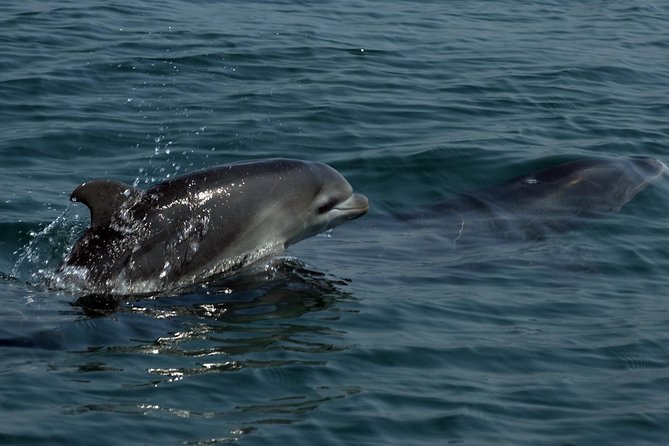
This is where honest expectations matter most. Dolphins may be feeding, traveling, caring for young, or simply uninterested in people. A mother with a very young calf may keep away from the boat. The guide should respect that behavior rather than chase the group into an interaction.
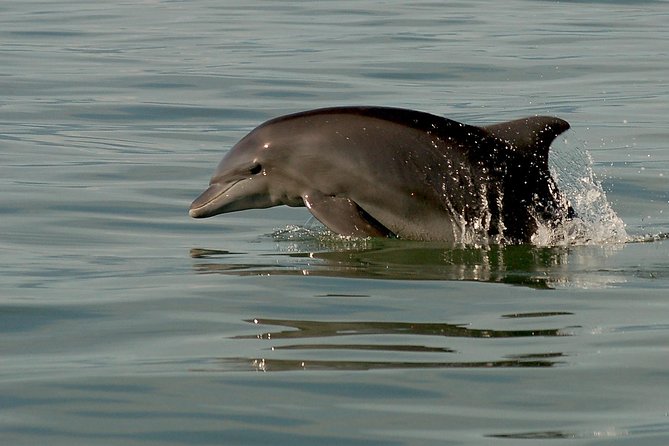
You may still get excellent views from the boat. Dolphins can surface close by, leap, travel in formation, or play around the boat. You might see baby dolphins in a pod, though the presence of calves does not make a swim more likely.
One group spent much of the morning searching and saw whales and dolphins, but the dolphins did not come close enough for swimming. That can feel disappointing if the title is the only thing you have read. It is much easier to accept if you understand that watch and swim means both options depend on the animals.
The crew may continue looking for another pod when conditions allow. Even then, there is no ethical way to force the result. The tour’s value rests on seeing wild behavior, not manufacturing a close encounter.
The guides and the learning before the fun
The strongest part of the human side is the guide’s role. Camilla is described as warm, energetic, and passionate about dolphin protection. Gema and Gemma are praised for explaining behavior and directing swimmers toward dolphins beneath the surface. Maru is noted for recognizing when a pod had had enough and moving on.
That last skill is important. A good guide does more than point at animals. The guide helps you understand when dolphins are curious, when they are busy feeding, and when they want space.
The introduction also makes the activity more suitable for families. Children can learn what to expect before boarding, and some young swimmers have entered the water successfully. Still, a three-year-old may find the boat and waiting periods less engaging than a six or seven-year-old. Parents should judge swimming ability and comfort in open water carefully.
People who prefer to stay dry can still enjoy the trip from the boat. You can watch pods, whales, turtles, and rays without entering the sea. The swim is an option within the outing, not the only way to take part.
What to bring and what is included
Snorkeling equipment is provided, along with bottled water and soda. Alcohol is not provided. A small snack, such as granola bars, is listed separately and is not included in the main package, so plan accordingly if you need food during the morning.
Wear a swimsuit. You may be asked to enter the water with little warning when the dolphins show interest. A phone can capture surface sightings, but underwater images are harder and depend on your equipment and swimming ability.
The reviews include repeated reminders that the activity can be physically active. You may sit, stand, move around the boat, and enter the water several times. If you are not a confident swimmer, you can remain aboard, but you should not book this expecting a relaxed cruise.
The service is offered in English. Service animals are allowed, public transportation is nearby, and most people can participate. The activity is not recommended for anyone more than seven months pregnant. Bad weather can cause cancellation, with a new date or full refund offered.
Is $105 a fair price?
I consider the price reasonable for a half-day wildlife outing if you value ethical encounters and marine education. You get a boat trip, a biologist guide, equipment, drinks, and a chance to support ongoing research. Whale sightings and multiple dolphin swims can make the outing feel like one of the best uses of a morning in Puerto Vallarta.
The value is weaker if you want certainty. You could pay $105, see dolphins, and never enter the water. You could also spend much of the trip searching before a pod finally approaches.
That uncertainty is not a flaw in the operator. It is the cost of refusing to feed, train, or confine the animals. A captive dolphin experience may offer a more predictable swim, but it does not offer the same lesson in wild behavior.
I would compare this tour with your own priorities. If you want a scheduled, guaranteed dolphin interaction, this is not the right product. If you want to see free dolphins and accept that the sea makes the final decision, the price is easier to justify.
Who should book this experience?
I would recommend it to people who care about seeing marine mammals in the wild and who can stay patient when nature slows the schedule. It suits couples, solo visitors, families with confident swimmers, and anyone who wants a wildlife outing rather than a poolside animal show.
It is especially good for someone who has wondered how dolphins behave when nobody is directing them. The hydrophone, pre-trip lesson, and small-group swims give the experience more substance than a simple boat ride.
I would think twice if you dislike open-water swimming, have limited mobility, need guaranteed animal contact, or expect comfortable seating for the entire outing. The boat is practical, not plush, and the search can take time.
Book at least a few weeks ahead if your schedule is fixed. The experience is often reserved about 33 days in advance. You can cancel for a full refund up to 24 hours before the start time, but cancellations or changes inside that window are not refunded.
Should you book the wild dolphin swim?
Book it if you want the real thing, including the waiting, uncertainty, and moments when the dolphins decide to come close. The strongest mornings can include pods with calves, humpback whales, repeated swims, and a guide who treats the animals as wild creatures rather than props.
Skip it if your main goal is a guaranteed swim or a long, close photograph. For everyone else, this is a thoughtful way to meet Puerto Vallarta’s marine life, with the important understanding that the dolphins are in charge.
FAQ
Where does the tour start?
It starts at Opequimar Centro Marino, Av. Paseo de la Marina Sur 214, Marina Vallarta, Puerto Vallarta, Jalisco, Mexico.
What time does the tour begin?
The scheduled start time is 9:00 am.
How long does the experience last?
The full activity lasts approximately three hours and 30 minutes. The time on the boat is described as roughly three hours.
How much does the tour cost?
The listed price is $105 per person.
Is swimming with dolphins guaranteed?
No. You may watch dolphins without swimming if the animals do not approach or show interest. The dolphins are wild and decide how they interact.
What animals might I see?
You may see bottlenose dolphins, turtles, rays, and other marine life. Humpback whales, including mothers and calves, may also be seen.
Is snorkeling equipment provided?
Yes. Snorkeling equipment is included.
Are drinks provided?
Yes. Bottled water and soda are included. Alcoholic drinks are not provided.
Is food included?
A small snack such as granola bars is not included in the main package.
Can children join the tour?
Most people can participate, and children have joined the activity. Children should be comfortable with the boat and open-water conditions, and swimming ability is important for anyone entering the sea.
What happens if the weather is poor?
If bad weather cancels the activity, you will be offered another date or a full refund.
What is the cancellation policy?
You can cancel at least 24 hours before the start time for a full refund. Cancellations or changes made less than 24 hours before the start time are not refunded.
Just added on the water around Mexico
- Ocean Safari: Sea Lions, Mobula Rays, Dolphins, Orcas & Whales★ 5.0 · 85 reviews
- Akumal: Dolphin Encounter★ 4.4 · 56 reviews
- Cancun: Dolphin Swim and Garrafon Reef Park Tour with Buffet★ 3.9 · 7 reviews
- Puerto Aventuras: Dolphin and Manatee Interaction with Lunch★ 4.8 · 4 reviews
- Puerto Aventuras: Dolphin Swim, Sea Lions, Manatees, & Lunch★ 4.7 · 33 reviews
- Puerto Escondido: Boat Tour among Dolphins and Turtles★ 4.4 · 52 reviews
- Whale & Dolphin Watching Cruise in Puerto Vallarta All Inclusive★ 4.0 · 212 reviews
- Wild Dolphin Encounter & Snorkeling Adventure★ 5.0 · 147 reviews
Mexico Dolphin Watching Tours, compared.
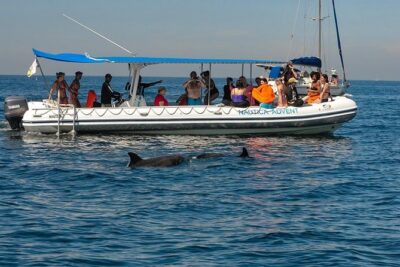
Whale and Dolphin Watching with a Biologist in Puerto Vallarta
Our review of this trip →
Puerto Escondido: Boat Tour to see Dolphins and Marine Life
Our review of this trip →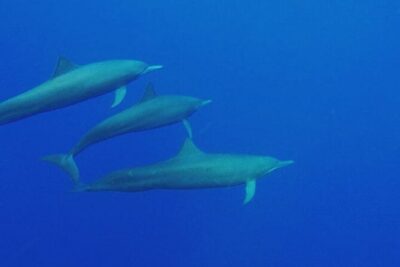
Dolphin & Whale Watching in Puerto Escondido
Our review of this trip →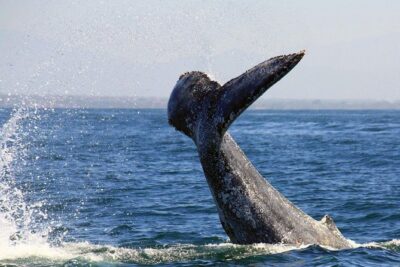
Whale & Dolphin Watching Cruise in Puerto Vallarta All Inclusive
Our review of this trip →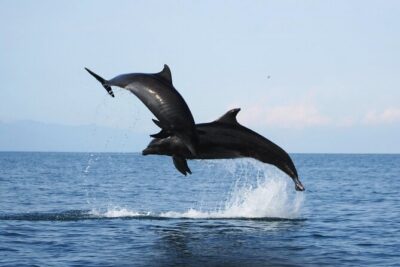
Ocean Safari: Sea Lions, Mobula Rays, Dolphins, Orcas & Whales
Our review of this trip →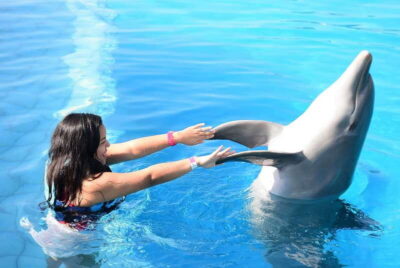
Browse the lists this tour appears in