
Review · MEXICO
Whale and Dolphin Watching with a Biologist in Puerto Vallarta
The best part of this Puerto Vallarta excursion is that you are not just looking for whales. You are learning how biologists identify their behavior, listen to their songs with a hydrophone, and contribute observations to ongoing research. Humpbacks arrive in the bay during winter to mate and give birth, so you may see mothers, calves, males competing for females, or a young whale practicing its breaching skills.
I especially like the small boat format, which gives you a better chance to see the action from either side and lets the captain position you near the animals without crowding them. I also like the opening land session, where you may handle baleen and see the scale of a whale’s vertebrae before heading out. The main caution is simple: this is a boat trip in open water, and there is no bathroom onboard.
Key points to know before you book
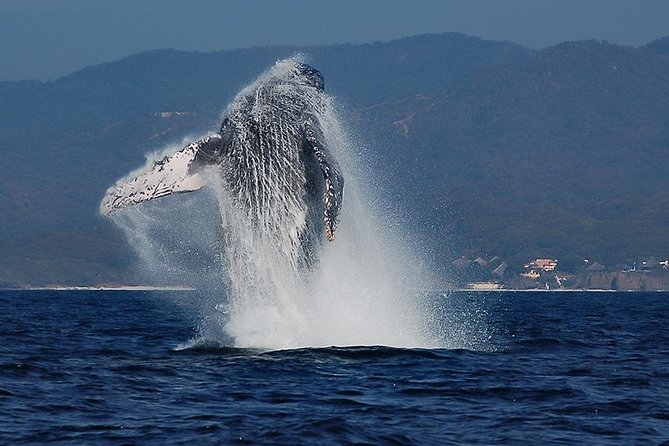
- Winter humpbacks are the main event: The bay can hold mothers, calves, single whales, and groups of males.
- Biology shapes the trip: Guides such as Jemma, Gemma, and Camilla explain behavior rather than simply pointing out animals.
- You may hear whales underwater: A hydrophone can bring whale songs and other sounds into the boat.
- Wildlife variety is a real bonus: Dolphins, turtles, giant mantas, sea lions, and blue-footed boobies may also appear.
- The boat carries no more than 20 people: Groups in the supplied experiences were often around 12 to 16 people.
- Plan around the sea, not a clock: The trip lasts about four hours, but animal sightings can take time and conditions can change.
Why this whale tour feels different
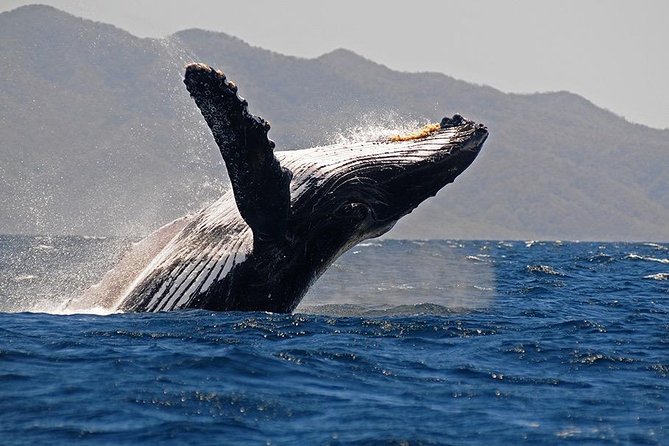
Many whale excursions are built around the hope of a dramatic breach and a good photograph. This one adds a useful layer of science. Your guide may explain how humpbacks communicate, how mothers teach calves, why males gather around females, and how researchers track individual animals and dolphin groups.
The guides are marine specialists, not general sightseeing hosts. The team includes biologists with marine ecology backgrounds, a science journalist, and a professional wildlife photographer. Names appearing with this operation include Jemma or Gemma, Camilla, and Jama, with captains such as Jorge and Cesar. The spelling varies in the tour material, so do not be surprised if your confirmation uses a slightly different version.
That scientific focus matters most when the whales are not performing. A whale surfacing, resting, or changing direction becomes easier to understand when someone explains what you are seeing. You are less likely to spend the whole trip asking where to point your camera.
The tour also supports research programs involving whales and dolphins. Your sightings and participation help provide information for that work. That gives the outing more purpose than a standard ride around the bay, though you should still think of it first as a wildlife trip. The animals decide what happens.
More Whale and Dolphin Watching Tours in Mexico
- Dolphin & Whale Watching in Puerto Escondido
★ 5.0 · 278 reviews - Whale & Dolphin Watching Cruise in Puerto Vallarta All Inclusive
★ 4.0 · 212 reviews - Ocean Safari: Sea Lions, Mobula Rays, Dolphins, Orcas & Whales
★ 5.0 · 85 reviews
Starting at Opequimar Centro Marino
You meet at Opequimar Centro Marino, Av. Paseo de la Marina Sur 214, in Marina Vallarta. The experience ends at the same place, which keeps the arrangement simple if you are staying near the marina or can reach it by local transport.
The first stage may be an educational talk on land. This is one of the smartest parts of the outing because it gives you a basic vocabulary before you board. You may see baleen and a whale vertebra, which make the animal’s scale easier to grasp than any number on a fact sheet.
Pay attention here. Once the boat leaves, the wind and engine noise can make long explanations harder to follow. The opening session is your chance to ask about humpback behavior, the local whale season, and what the crew will record during the trip.
Confirmation arrives within 48 hours of booking, subject to availability. Since the experience is often reserved well ahead, with an average booking lead time of about 26 days, I would not leave it until the last moment during the busy winter period.
Four hours on a small covered boat
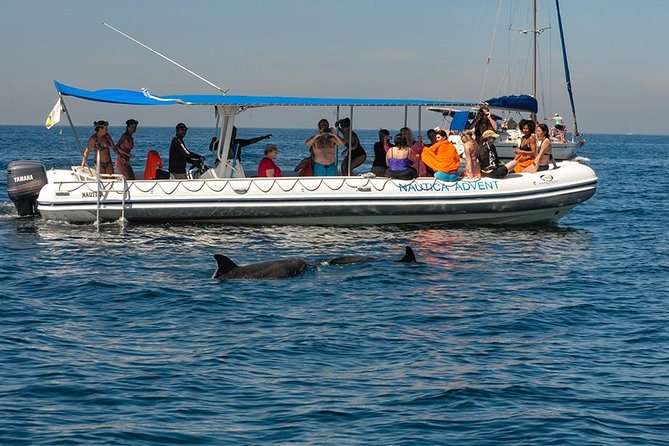
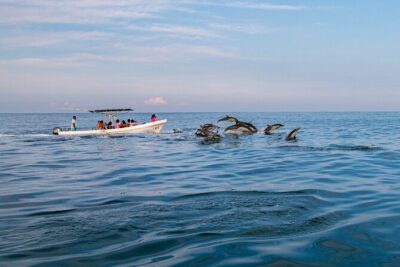
The boat is described as small, covered, and suitable for this kind of wildlife work. Capacity is limited to 20 people, while several outings had about 12 to 16 passengers. That is a useful middle ground: small enough for a clear view, but large enough to keep the price at $105 per person rather than pushing into private charter territory.
A small boat also helps you move your attention quickly. One person can watch the bow while another looks behind the boat for a tail or fin. The captain may position the boat behind a whale for a better view of its fluke, while still keeping a respectful distance.
The cover is welcome in strong sun and wind. It does not turn the trip into a smooth, quiet cruise, though. You are still on open water, and conditions can become windy. Wear secure clothing, protect your camera, and bring whatever motion-sickness remedy you normally use. The supplied information does not specify onboard storage or facilities, so keep your personal gear manageable.
There is no bathroom on the boat. Use the facilities before departure and avoid treating the trip as a casual hop-on, hop-off harbor cruise. Four hours is a long time if you need to return to shore urgently.
Finding humpbacks in Puerto Vallarta Bay
Humpback whales are the central reason to book this trip. During winter, they come to the Puerto Vallarta area to mate and give birth. That seasonal pattern creates several possible scenes, from a lone whale surfacing quietly to a mother and calf traveling together.
You might see a baby whale breach, a mother teaching a calf to communicate, or several males competing for access to a female. Some outings have produced repeated breaches and groups of many whales, while others have started slowly before the animals appeared. That difference is worth understanding: the wildlife can be spectacular, but it is not scheduled entertainment.
The captain and biologist work as a pair. The captain watches the water and handles the boat, while the guide reads behavior and explains what may happen next. A guide may recognize when a whale is preparing to surface or identify the difference between a traveling whale and one that is resting.
Reports from the supplied experiences describe sightings beginning within 15 to 20 minutes on some trips. Another outing went about an hour without a whale before the group found mothers, calves, and males. Both situations are normal for wildlife watching. If you need constant action, this may test your patience. If you can accept a quiet stretch before a sudden burst of activity, the waiting becomes part of the experience.
More Dolphin Watching with a Marine Biologist in Mexico:
- Portimão: Benagil Caves & Dolphins Watching with Biologist
★ 4.8 · 3,795 reviews - Lagos: Combo Dolphin and Benagil Tour with Marine Biologist
★ 4.7 · 2,352 reviews - Lisbon: Dolphin Watching with Marine Biologist
★ 4.9 · 1,853 reviews - Lagos: Dolphin Watch Tour with Professional Marine Biologist
★ 4.9 · 1,500 reviews
Listening to whale songs through a hydrophone
The hydrophone is one of the strongest details of this tour. It lets you hear sounds beneath the surface, including the songs of male humpbacks. This changes the mood of the trip. You are not only watching a back rise or a tail disappear. You are getting a sense of the hidden activity below the boat.
The guide can connect the sounds to what you are seeing. If several males are nearby, or if a mother and calf are communicating, the audio adds context that photographs cannot capture. Whale song may also continue when the animals are out of sight, giving you something to notice during a quieter spell.
This is especially valuable for people who have already taken a basic whale cruise. A boat ride that only counts sightings can feel repetitive. Hearing the animals and learning how scientists study them makes the outing more involving.
Dolphins, turtles, mantas, and other surprises
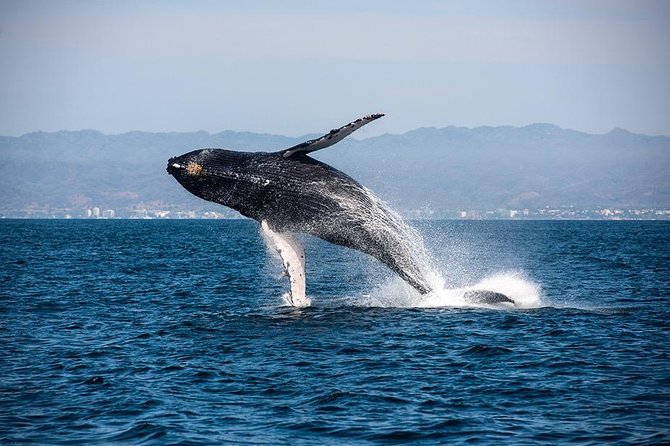
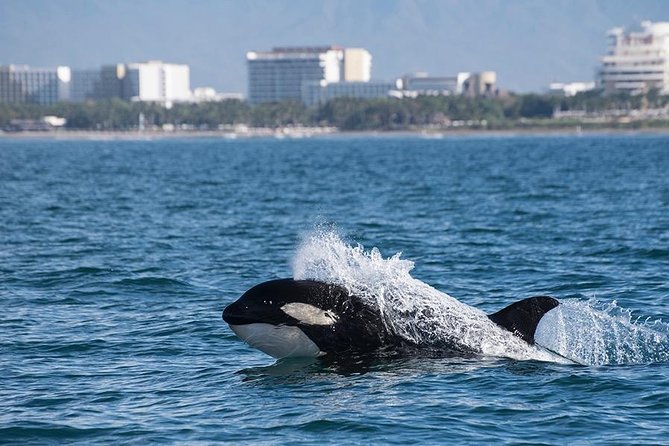
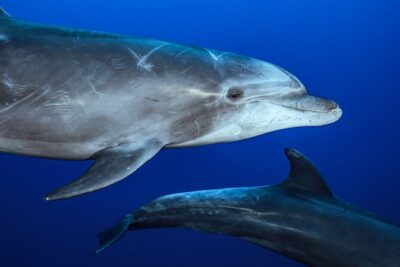
The tour combines whale watching with dolphin watching during winter. Possible species include bottlenose, spotted, spinner, and rough-toothed dolphins. Orcas or false orcas may appear, but they are clearly a matter of luck rather than a normal expectation.
Dolphins can be less predictable than whales. They may travel near the boat, gather in a large pod, or appear while the crew is moving between whale areas. The guide can also explain local behavior, including how certain dolphin groups stay within particular areas.
Other possible sightings include marine turtles and giant mantas. Some outings have also included sea lions and blue-footed boobies. These extras give the trip variety, but you should not book it expecting every species listed. Wildlife tours work best when you treat the list as a set of possibilities.
The best surprise may be watching different animals interact. A calf playing near dolphins, for instance, is more memorable than checking off two separate species. Bring a camera if you like, but keep your attention on the water. Breaches and quick dolphin appearances are easy to miss while adjusting a phone.
What the guides and captains add
The guides receive the strongest praise for this experience, and that makes sense. A marine biologist can turn a brief sighting into a lesson about parenting, movement, communication, and social behavior. Jemma, Gemma, Camilla, and Jama are described as warm, enthusiastic, and deeply engaged with the animals.
Camilla is also noted for making sandwiches and bringing a small birthday treat for one passenger. Those touches are not the main reason to book, but they suggest a friendly onboard atmosphere. Food and drinks are available on some departures, though you should not assume every detail will be identical.
Captains such as Jorge and Cesar handle the practical side. They maneuver the boat, help passengers board safely, and look for the best viewing position. A calm captain matters on a small vessel, particularly when wind picks up or the boat is moving quickly toward a sighting.
The strongest crew combination is one that knows when to approach and when to wait. The goal is not to chase an animal at full speed or crowd it for a photograph. Several accounts describe the captain keeping a respectful distance while still offering close views. That balance is important for an ethical wildlife trip.
Is $105 a fair price?
At $105 per person, this is not the cheapest boat ride in Puerto Vallarta. You are paying for roughly four hours on the water, a small group, a specialist guide, a captain focused on wildlife positioning, and access to a research-based program.
I think the price is reasonable if you value interpretation and a better chance of seeing clearly from a smaller boat. It becomes especially good value when you use the guide’s expertise: ask questions, listen to the hydrophone, and take part in the research rather than treating the trip as a photo transfer.
The value is less certain if you only want a quick scenic cruise or if you are comparing it with a large, basic boat at a much lower price. The higher cost does not control the whales. It buys a more focused operation and better scientific context, not a guaranteed breach on demand.
The operator states that its experience and research help it find the animals and advertises a money-back guarantee if the animals are not found. Read the exact terms at booking, since wildlife policies can have conditions. Weather can also cancel the outing, in which case you are offered another date or a full refund.
Who should book this experience?
I would choose this trip for anyone who wants to understand what they are seeing, not just photograph a tail. It suits couples, families with teenagers, and first-time whale watchers who appreciate clear explanations.
It is also a good fit for photographers, with one warning: the animals do not pose, and a small boat can move quickly. You may get excellent views, but you will need patience and quick reactions.
Families should know that the boat has no bathroom and that the outing lasts about four hours. Most people can participate, and service animals are allowed. The activity is not recommended for people more than seven months pregnant.
I would think twice if you become uncomfortable in open water, need frequent access to shore, or dislike waiting for wildlife. The boat is covered, but this is still an active sea excursion, not a calm harbor tour.
Practical details before you go
Wear clothing that can handle wind and sun. Bring a camera, but keep it secure and make room for other passengers along the sides of the boat.
Use the restroom before boarding. Since the experience ends back at Opequimar Centro Marino, you can plan your next activity from the marina, but do not schedule something that requires a rushed arrival immediately afterward.
Bring cash for tips if you want to recognize the crew. Some outings include sandwiches and soft drinks, but the most important preparation is mental: allow the animals to set the pace.
You can cancel for a full refund up to 24 hours before the start time. Changes or cancellations inside 24 hours are not accepted and are not refunded. The experience also requires a minimum number of participants, so a departure can be changed or canceled if that minimum is not met.
My booking recommendation
Yes, I would book this tour during whale season if you want a small-group trip with real biological interpretation. The hydrophone, research connection, covered boat, and strong guide-captain partnership give it more substance than a basic whale ride.
Choose it with realistic expectations. You may see whales within minutes, or you may wait before the bay comes alive. You may see dolphins, turtles, mantas, or nothing beyond the main whale sightings. The $105 price makes sense when you care about the quality of the explanation and the ethics of the encounter, not simply the number of photographs.
FAQ
Where does the whale-watching tour start?
The tour starts at Opequimar Centro Marino, Av. Paseo de la Marina Sur 214, Marina Vallarta, Puerto Vallarta, Jalisco, Mexico.
Where does the experience end?
The activity ends back at the meeting point at Opequimar Centro Marino.
How long does the tour last?
The tour lasts approximately four hours.
How much does the tour cost?
The listed price is $105 per person.
What animals might I see?
You may see humpback whales, bottlenose dolphins, spotted dolphins, spinner dolphins, rough-toothed dolphins, marine turtles, and giant mantas. Orcas, false orcas, sea lions, and blue-footed boobies may also appear.
Is the tour offered in English?
Yes. The experience is offered in English.
How many people can join the boat?
The tour has a maximum of 20 participants. Some departures have had groups of about 12 to 16 people.
Is there a bathroom on the boat?
No. Use the restroom before boarding.
What happens if weather cancels the tour?
If poor weather causes a cancellation, you are offered a different date or a full refund. If the minimum number of participants is not reached, you are offered a different date or experience, or a full refund.
Just added on the water around Mexico
- Akumal: Dolphin Encounter★ 4.4 · 56 reviews
- Ocean Safari: Sea Lions, Mobula Rays, Dolphins, Orcas & Whales★ 5.0 · 85 reviews
- Whale & Dolphin Watching Cruise in Puerto Vallarta All Inclusive★ 4.0 · 212 reviews
- Wild Dolphin Encounter & Snorkeling Adventure★ 5.0 · 147 reviews
- Cancun: Dolphin Encounter on Isla Mujeres and Garrafon Park★ 4.4 · 8 reviews
- Cancun: Dolphin Swim and Garrafon Reef Park Tour with Buffet★ 3.9 · 7 reviews
- Puerto Aventuras: Dolphin and Manatee Interaction with Lunch★ 4.8 · 4 reviews
- Puerto Aventuras: Dolphin Swim, Sea Lions, Manatees, & Lunch★ 4.7 · 33 reviews
Mexico Dolphin Watching Tours, compared.
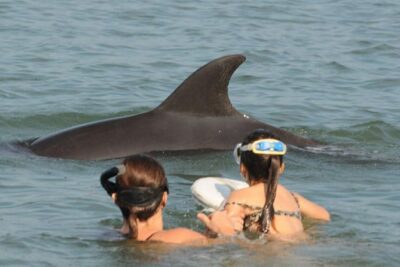
Watch and Swim with Dolphins in the Wild
Our review of this trip →
Puerto Escondido: Boat Tour to see Dolphins and Marine Life
Our review of this trip →
Dolphin & Whale Watching in Puerto Escondido
Our review of this trip →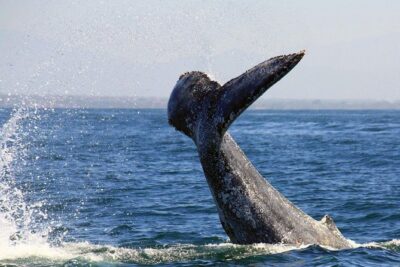
Whale & Dolphin Watching Cruise in Puerto Vallarta All Inclusive
Our review of this trip →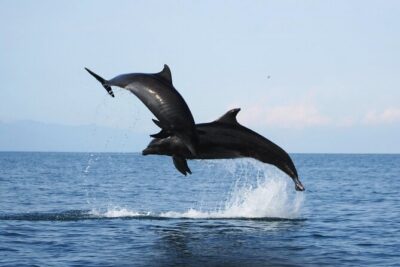
Ocean Safari: Sea Lions, Mobula Rays, Dolphins, Orcas & Whales
Our review of this trip →
Browse the lists this tour appears in