
Review · NEW ZEALAND
Auckland Dolphin and Whale Watching Eco-Safari Cruise
The best part of this Auckland cruise is that it is more than a quick wildlife hunt. You spend 4.5 hours crossing the Hauraki Gulf Marine Park with marine research scientists explaining the animals, islands, and conservation work around you. On a good day, dolphins may play beside the bow, while whales, penguins, seals, and seabirds add to the show.
I like the research connection, since your ticket contributes to marine mammal conservation, and I like the broad route through Auckland’s island-filled gulf. The main drawback is simple: wild animals set the schedule. You may see several dolphin pods and a whale, or spend much of the trip on a scenic boat ride with only brief sightings.
The 65-foot catamaran can carry up to 99 people, so a full departure may feel crowded around the viewing rails. Bring warm layers, sunscreen, sturdy flat-soled shoes, and patience. Check-in closes 15 minutes before departure, and the crew may offer a free return trip if no marine mammals are seen.
Key points to know before you book
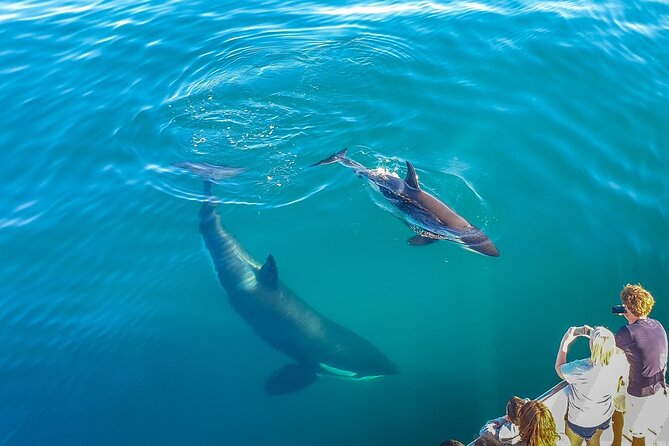
- Dolphins are the most dependable highlight: Pods often swim near the boat, sometimes with babies and young animals.
- The route covers a large stretch of the Hauraki Gulf: You pass Rangitoto, Motuihe, Motutapu, Tiritiri Matangi, and North Head.
- Marine scientists add real purpose: You hear about ongoing research, whale tracking, and conservation rather than getting only basic sightseeing commentary.
- Whales are possible, not promised: Bryde’s whales are native to New Zealand waters, but sightings can be brief or absent.
- The boat has indoor and outdoor viewing: That matters when wind, rain, or sun changes during the 4.5-hour outing.
- A no-sighting policy softens the risk: If you see no marine mammals, you can take the cruise again on another day at no extra charge.
Leaving Viaduct Harbour on a working research boat
You meet the crew at the New Zealand Maritime Museum in Auckland’s Viaduct Harbour. This is central and easy to reach by public transport, but do not cut it close. Check-in shuts 15 minutes before departure, and late arrivals risk losing their assigned seats.
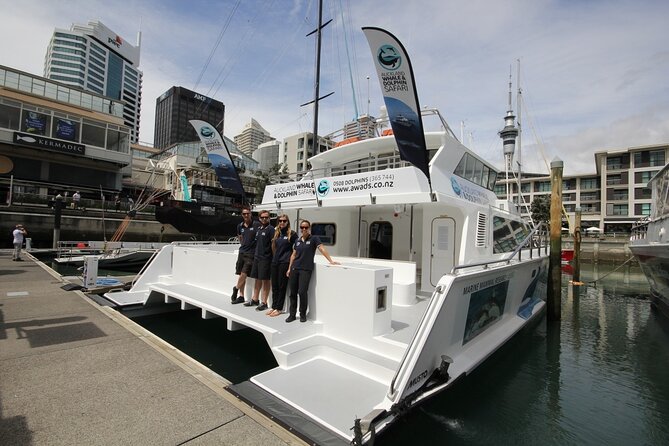
The vessel is a custom-built 65-foot, or 20-meter, catamaran. That design gives you a stable platform and several ways to watch the sea. You can move between outside viewing areas and covered or indoor seating, although a busy sailing can make prime rail space scarce.
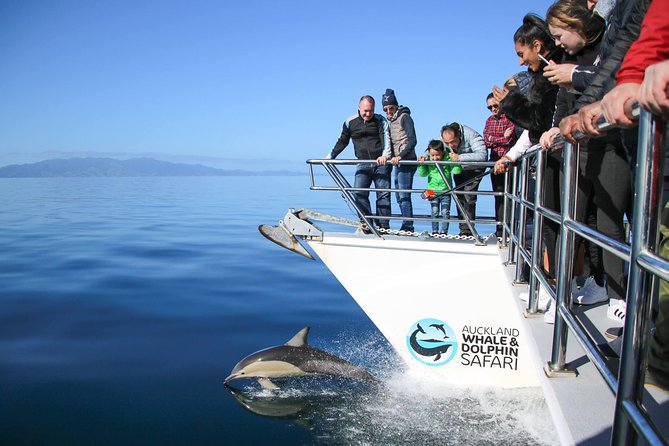
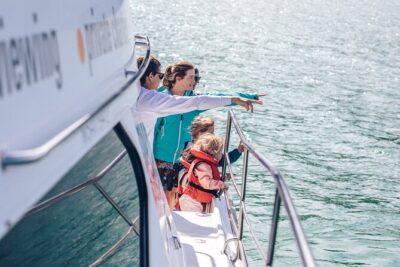
The maximum group size is 99 people. That is not a small private boat, and you should set your expectations accordingly. When dolphins surface, many people naturally gather at the same side of the vessel. The crew asks everyone to share viewing space, but you may need to be alert and polite if you want a clear look or photograph.
The boat has toilets and snacks available for purchase. Food and drinks are not included, so bring anything you may need for a half-day on the water or plan to buy refreshments onboard.
More Whale and Dolphin Watching Tours in the world:
- Tenerife: Eco-Yacht Whale and Dolphin Watching and Swimming
★ 4.7 · 15,619 reviews - Los Cristianos Respectful No-Chase Whale and Dolphin Safari
★ 4.6 · 12,782 reviews - From Funchal: Ecological Catamaran Dolphin Whale Watching
★ 4.5 · 8,204 reviews
Auckland Harbour Bridge and the first island views
The first stretch takes you out through Waitemata Harbour and beneath or near the Auckland Harbour Bridge. This gives you a useful change of scene: the city recedes, ferries and harbor activity give way to open water, and the skyline becomes part of the trip rather than just the departure backdrop.
Rangitoto Island soon becomes one of the main visual markers. Its volcanic profile is one of Auckland’s most recognizable sights, and seeing it from the water gives you a different sense of the gulf’s scale. The cruise does not present itself as an island landing tour, so you should not expect time ashore. These locations are scenic waypoints on a wildlife route.
This early portion can also be the bumpiest. Conditions vary, and one outing may have calm water while another has enough chop to make some passengers uncomfortable. If you are prone to seasickness, sit where you can focus on the horizon, spend time in fresh air, and avoid arriving with an empty stomach. The crew cannot control the weather or the movement of wild animals.
Crossing the Hauraki Gulf Marine Park
The main purpose of the cruise begins once you reach the Hauraki Gulf Marine Park. The park includes five marine reserves and a group of islands that support around 23 marine species. The guides explain how the gulf functions as feeding and breeding habitat, and they share details from partnerships with local marine scientists.
This is where the trip gains value beyond a standard sightseeing cruise. You are not simply told to watch for a fin. You learn which whales the team tracks, how sightings support research, and why the boat keeps a respectful distance from wildlife.
The crew may adjust the route and timing as conditions change. If a pod appears, the captain works to give you a good view without forcing the animals to interact. That approach means the boat may not charge straight toward every splash, but it is the right way to watch wild creatures.
Keep your binoculars ready, but do not rely on them as your only tool. Wildlife can appear on either side of the catamaran, and the most exciting moments may happen close to the bow or just beyond the rail. A hat with a chin strap is useful because the wind can be strong once the boat is moving.
Dolphins, Bryde’s whales, and the wildlife search
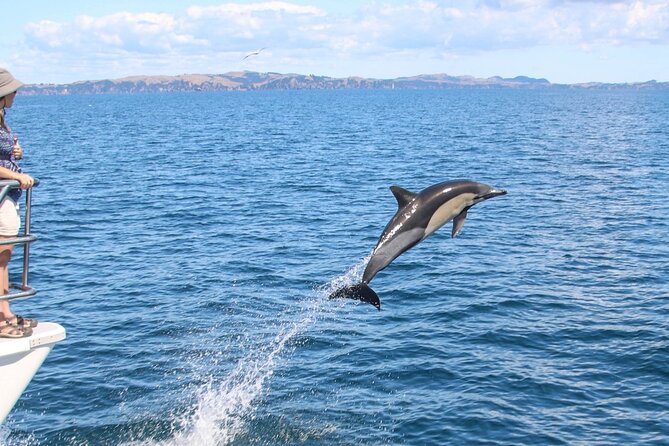
Dolphins are the species most likely to make the outing feel rewarding. Bottlenose dolphin pods are often seen in the gulf, and they may swim, bow-ride, or surface repeatedly beside the catamaran. Some sightings last only a few minutes. Others can continue for around half an hour, with dozens of appearances and several animals moving together.
You might also see nursery pods with young dolphins. These encounters are especially memorable, but the crew still needs to give the animals room. The best viewing may come in short bursts, so keep watching after the first sighting instead of assuming the show is over.
Bryde’s whales are native to New Zealand and are among the whales the crew seeks. A whale sighting can be spectacular, but whales can be elusive. You may see a blow, a back, or several surfacings rather than a long, close look. Some departures have produced multiple whale sightings; others have found no whales at all.
The company offers a free return trip if you see no marine mammals during your cruise. That is a useful safeguard for people staying in Auckland several days. It is less valuable if you are leaving New Zealand soon, since a return voucher may be impossible to use. Read the policy as a fair second chance, not as a guarantee that the next trip will produce whales.
Other possible sightings include seals, blue penguins, and even sharks. The supplied route and trip details specifically point to blue penguins, Australasian gannets, petrels, shearwaters, and white-fronted terns. A penguin may appear only briefly, so keep scanning near the water rather than watching only the horizon.
More Dolphin Watching Cruises in the world:
- Funchal: Dolphin and Whale Watching Catamaran Cruise
★ 4.5 · 5,697 reviews - Costa Adeje: Whale & Dolphin Eco-Cruise with Snacks & Drinks
★ 4.6 · 5,096 reviews - Gran Canaria: Catamaran Dolphin Watch Cruise with Snorkeling
★ 4.4 · 4,761 reviews - Los Gigantes: Dolphin & Whale Watching Cruise with Swim Stop
★ 4.7 · 4,539 reviews
Seabirds and the islands around Motuihe and Motutapu
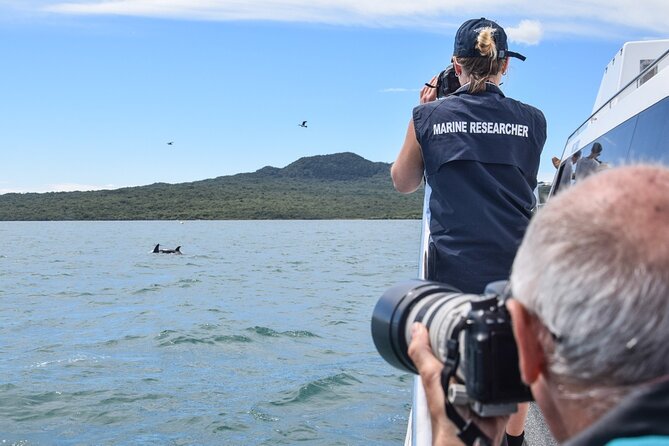
The Hauraki Gulf is not just a whale and dolphin area. Seabirds are an important part of the experience, and the guides may point out gannets plunging into the sea, petrels and shearwaters skimming above the water, and white-fronted terns moving across the gulf.
Motuihe and Motutapu islands add changing scenery to the route. Their shorelines help you understand how many islands are packed into Auckland’s marine park. The boat may pass at a distance, and you should think of these stops as viewing points rather than shore excursions.
Tiritiri Matangi Island is another notable point on the route. The cruise does not list a landing, so you will see it from the water. Even so, the island helps frame the gulf’s conservation story. The guides use the surrounding park and islands to explain the wider marine environment, not just the animals that happen to surface that day.
North Head Historic Reserve appears as the cruise works back toward Auckland. Along with views of the harbor entrance, it gives the final section a land-based reference point. By then, you have seen the city from several angles, from the downtown waterfront to open gulf waters and island channels.
What the onboard commentary adds
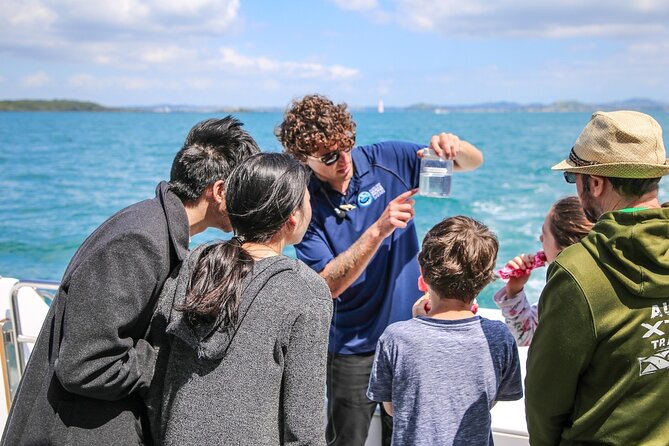
The strongest part of the cruise is often the crew’s explanation of what you are seeing. The captain and guides discuss marine research, whale tracking, the Hauraki Gulf, and the behavior of dolphins and other animals. That information gives the trip meaning even when sightings are limited.
The quality of the commentary can depend on where you sit and how clearly announcements carry. On a full boat, some passengers have found that staff speaking quietly were hard to hear from the back or lower areas. If the information matters to you, try to stay near the main presentation area and move closer when the crew begins explaining a sighting.
The staff also manage a difficult task: keeping nearly 100 people safe and giving everyone a fair chance to see animals. Be prepared to share the rail, rotate viewing positions, and avoid blocking someone’s view for a long stretch. A long lens or phone zoom can help when you cannot stand at the front.
Is $135.91 a fair price?
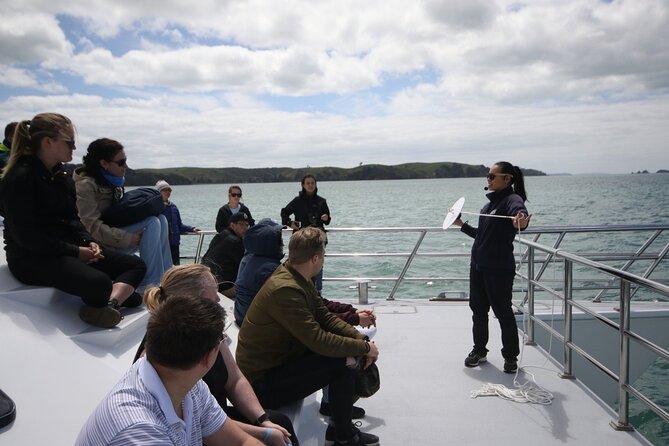
At $135.91 per person, this is not a casual harbor ride. You are paying for 4.5 hours on the water, a purpose-built catamaran, a local crew, marine science commentary, and the chance to see animals in a large protected marine area.
The value is strongest if you already enjoy boats, birds, coastal scenery, and learning about conservation. You are getting a substantial half-day outing, not a short city cruise. The conservation contribution also gives the ticket a wider purpose, since each booking supports marine mammal conservation.
The value is weaker if your only goal is a guaranteed whale photograph. No operator can promise that a wild whale will surface on schedule, and this cruise may return without a whale or with only a few brief dolphin sightings. A voucher helps, but only if you have enough time in Auckland to use it.
I would compare the price with other half-day activities in Auckland, not with a simple ferry fare. You are buying time, guiding, wildlife searching, and access to parts of the gulf you would not see from downtown. For a family or couple who treats the boat ride and marine education as part of the experience, the cost is easier to justify.
Who will enjoy this cruise most?
You are a good match if you like open-water scenery, wildlife watching, and trips where the outcome is not fully controlled. Families can enjoy the mix of dolphins, birds, islands, and city views, though younger children may find 4.5 hours long if the sea is rough or sightings are slow.
Photographers should bring a camera, but accept that conditions are demanding. Animals move quickly, the boat shifts, and the best action may happen on the opposite side. Binoculars are useful, and a camera strap is sensible.
This is also a good choice if you want your sightseeing to support conservation. The marine scientists and research focus make the cruise feel more purposeful than a trip that simply circles the harbor.
You may want to reconsider if you dislike wind, uncertain wildlife sightings, or crowded viewing areas. The boat is stable, but it is still a boat in open water. Dress for colder conditions than you expect, and bring weatherproof gear, sunscreen, sunglasses, and a hat that will stay put.
Cancellation is free up to 24 hours before departure. If poor weather cancels the trip, you can choose another date or receive a full refund. The same basic choice applies if the minimum number of participants is not reached.
Should you book the Auckland Dolphin and Whale Watching Eco-Safari?
I would book this cruise if you have half a day in Auckland and can judge success by the whole outing, not just by a whale checklist. The combination of dolphins, seabirds, islands, marine science, and open water makes it worthwhile even when the largest animals stay out of sight.
Book early in your visit if possible, especially if you want a chance to use the free return trip. Choose another activity if a guaranteed close encounter is essential. The smart approach is to arrive prepared for wind and uncertainty, then enjoy the gulf for what it is: a real marine environment, not a staged show.
FAQ
Where does the Auckland Dolphin and Whale Watching Eco-Safari depart?
The meeting point is at Eastern Viaduct in Auckland Central, at the New Zealand Maritime Museum in Viaduct Harbour.
How long does the cruise last?
The experience lasts approximately 4 hours and 30 minutes.
What animals might I see?
Possible sightings include up to six types of whales, bottlenose dolphins, seals, blue penguins, sharks, Australasian gannets, petrels, shearwaters, and white-fronted terns.
Are whale and dolphin sightings guaranteed?
No. Wildlife sightings cannot be guaranteed. If you do not see any marine mammals, you can take the cruise again on another day at no extra charge.
What should I wear and bring?
Wear warm layers, weatherproof clothing, sturdy flat-soled shoes, sunscreen, sunglasses, and a sun hat with a chin strap. A camera and binoculars are also useful.
Is food included?
No. Food and drinks are not included, but snacks and drinks are available to purchase onboard.
What happens if the weather cancels the cruise?
If poor weather causes cancellation, you will be offered another date or a full refund. You can also cancel for a full refund if you do so at least 24 hours before the scheduled start time.
Just added on the water around the world
- Bali Bliss: Dolphin Lovina Private Expedition★ 4.1 · 6 reviews
- Arrábida Natural Park/Sesimbra: Dolphin Watching★ 5.0 · 2 reviews
- Auckland: Bay of Islands Day Tour with Dolphin Cruise★ 5.0 · 11 reviews
- Auckland: Tikapa Moana Whales, Dolphins and Islands Cruise★ 3.9 · 292 reviews
- Anna Maria Island: Sunset Dolphin Cruise★ 4.9 · 8 reviews
- Anna Maria Island: Dolphin Cruise★ 4.9 · 8 reviews
- Always private 4 hour – Sail- dolphin Yacht Charter-paddle★ 4.5 · 7 reviews
- Alghero: Dolphin Watching Tour with Marine Researcher★ 4.7 · 172 reviews
New Zealand Dolphin Watching Tours, compared.
Akaroa Dolphins ~ Harbour Nature Cruise
Our review of this trip →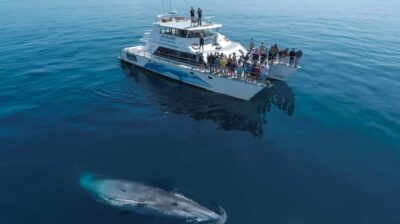
Whale and Dolphin Watching Half-Day Eco Cruise
Our review of this trip →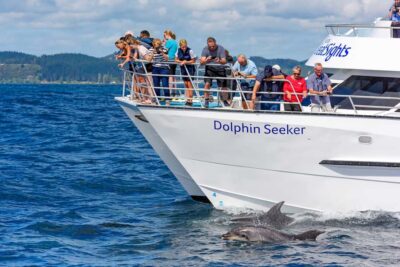
Paihia/Russell: Hole in the Rock, Dolphins & Island Cruise
Our review of this trip →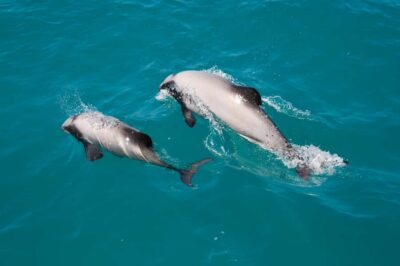
Tikapa Moana Whales, Dolphins and Islands Cruise
Our review of this trip →
Akaroa Harbour 2-Hour Dolphin Nature Cruise
Our review of this trip →
Akaroa: Swimming with Wild Dolphins Experience
Our review of this trip →Browse the lists this tour appears in